
Politics
Senate takes first step to fund ICE, Border Patrol in bid to cut Dems out of the funding process

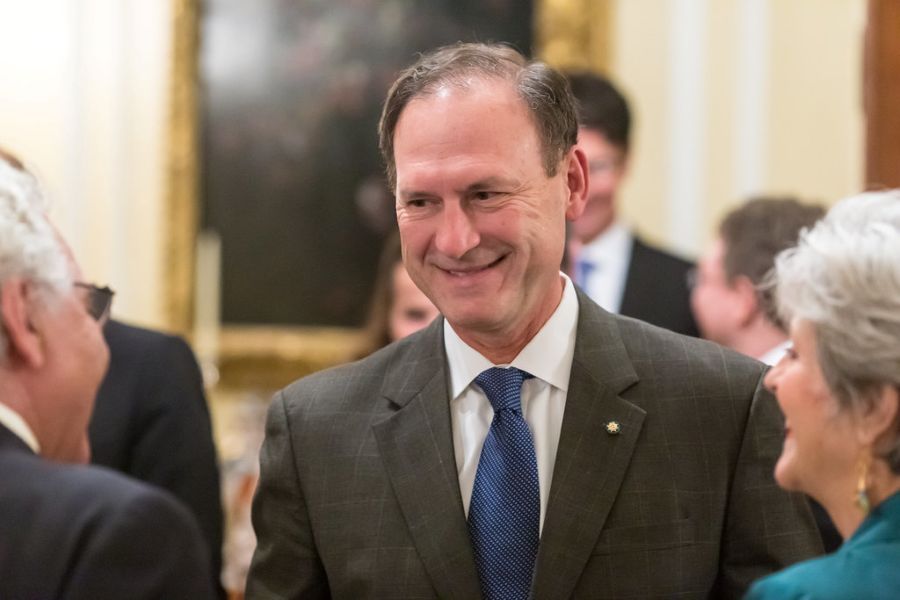
Supreme Court Justice Samuel Alito has abruptly withdrawn from one of the most consequential climate-related cases before the high court, leaving just eight justices to decide a dispute that could affect lawsuits seeking billions of dollars from fossil-fuel companies.
The court notified attorneys Monday that Alito “has determined that he will not continue to participate” in *Suncor Energy Inc. v. County Commissioners of Boulder County*.
No explanation was provided for his decision.
The last-minute development comes ahead of arguments in a closely watched Colorado case that could have implications for similar climate lawsuits brought by states and municipalities across the country.
The dispute dates back to 2018, when Boulder County and the City of Boulder sued Exxon Mobil and Suncor Energy in Colorado state court. San Miguel County later joined the litigation.
The municipalities allege the companies contributed to “climate-related harms” through decades of fossil-fuel production, refining and sales, along with what the plaintiffs describe as “concealment or misrepresentation” concerning the risks associated with their products.
They are seeking damages under Colorado state law for costs they attribute to climate change, including flooding, wildfire risks, drought and damage to public infrastructure.
The energy companies argue that the claims cannot proceed under state tort law because federal law governs interstate air pollution and because allowing individual states to regulate conduct tied to global emissions raises constitutional concerns.
After years of litigation over where and how the case could proceed, the Colorado Supreme Court allowed the lawsuit to move forward.
The U.S. Supreme Court subsequently agreed to hear the dispute.
The stakes extend far beyond Colorado.
Similar lawsuits have been filed against fossil-fuel producers by states and local governments seeking compensation for climate-related costs. The Supreme Court’s eventual decision could therefore shape how those cases proceed.
Alito’s withdrawal is particularly notable because he previously recused himself from an earlier petition arising from the same Colorado litigation in 2023.
He has also stepped aside from other energy-related cases.
When the Supreme Court agreed to hear the current Suncor appeal, however, a court spokesperson said in May that Alito “does not have a financial interest in any party” and that the court’s legal counsel had determined recusal was not required.
Alito does not own stock in Exxon Mobil or Suncor.
His most recent financial disclosure does list individual investments in other energy companies, including ConocoPhillips and Phillips 66, which are defendants in separate climate-related litigation.
Advocacy groups had argued that those investments, combined with the potential industry-wide implications of the Suncor case, raised questions under the Supreme Court’s Code of Conduct.
The code states that a justice should recuse when the justice’s impartiality might reasonably be questioned or when the justice has a financial interest in the subject matter in controversy.
But justices generally are not required to explain why they recuse themselves, and Alito has not publicly stated what prompted his decision in this case.
His absence could have a significant procedural consequence.
Only eight justices will now participate. If the court divides 4-4, the Colorado Supreme Court’s ruling would remain in place without establishing a nationwide Supreme Court precedent.
The remaining court includes five conservative justices and three liberal justices, although ideological alignment does not necessarily determine how individual justices will approach the federal-preemption questions presented in the case.
Alito had been viewed by some legal observers as potentially receptive to the companies’ argument that federal law prevents states from using their own tort laws to impose liability over emissions associated with global climate change.
His decision to step aside removes one vote from the case before arguments even begin.
What remains unexplained is why.
The court’s notification says only that Alito “has determined that he will not continue to participate,” leaving the reason for his withdrawal undisclosed as the justices prepare to hear a case with potential consequences for climate litigation nationwide.
Republicans were dealt a surprise blow in one of Pennsylvania’s most reliably red state House districts after Democrat Brandon Dukes pulled off a razor-thin special-election upset in territory President Donald Trump carried by more than 18 points.
But the fight isn’t over.
Dukes defeated Republican Scott Timko by just 88 votes in Pennsylvania’s 12th House District in Butler County, flipping a seat Republicans had controlled for decades.
Now Republicans will get an immediate opportunity to take it back when Dukes and Timko face each other again in November.
The special-election result immediately drew attention because of just how Republican the district has historically been.
Trump carried the district by more than 18 percentage points in the 2024 presidential election, while former Republican state Rep. Stephenie Scialabba won the district by roughly 30 points that same year.
Scialabba’s resignation earlier this year created the vacancy and triggered the special election.
Dukes’ victory broke a Republican hold on the seat dating back decades and gave Democrats a significant pickup just months before the November midterms.
But Republicans are pointing to one major factor that could make the rematch very different: turnout.
Participation in the special election was unusually low, producing an electorate far smaller than the one expected to vote in November.
That leaves both parties preparing for a dramatically different contest when a much larger group of voters returns to the polls for the general election.
The Pennsylvania House Republican Campaign Committee made clear that it considers Tuesday’s result only the first round.
“The General Election starts today with Scott Timko reaching out to voters, building a winning coalition, and holding Brandon Dukes accountable for his extreme positions that he continues to hide from voters.”
The special-election reporting did not specify which positions Republicans were referring to.
Pennsylvania House Republican Leader Jesse Topper also sought to put the loss in perspective, describing the result as “disappointing but unsurprising” while pointing to changing demographics, the summertime election date and the unpredictable nature of special-election turnout.
“There is much more yet to unfold in the final months of the 2026 election cycle and we will continue carrying out vision for positive growth in Pennsylvania through November,” he said.
The district itself underscores why the result is attracting attention.
Pennsylvania’s 12th House District covers portions of Butler County north of Pittsburgh, including Cranberry, Adams and Jackson townships and several surrounding communities. Republicans also hold a substantial voter-registration advantage in the district.
Yet Dukes managed to overcome those structural advantages in the low-turnout special election and capture the seat by fewer than 100 votes.
The result gives Democrats control of a district that had long been considered safe Republican territory — at least for now.
Republicans will have their chance to reverse the upset on November 3, when Timko and Dukes meet again to determine who will represent the district for a full two-year term beginning in 2027.
With the special election decided by only 88 votes, the rematch is shaping up to be a closely watched Pennsylvania House contest heading into November.
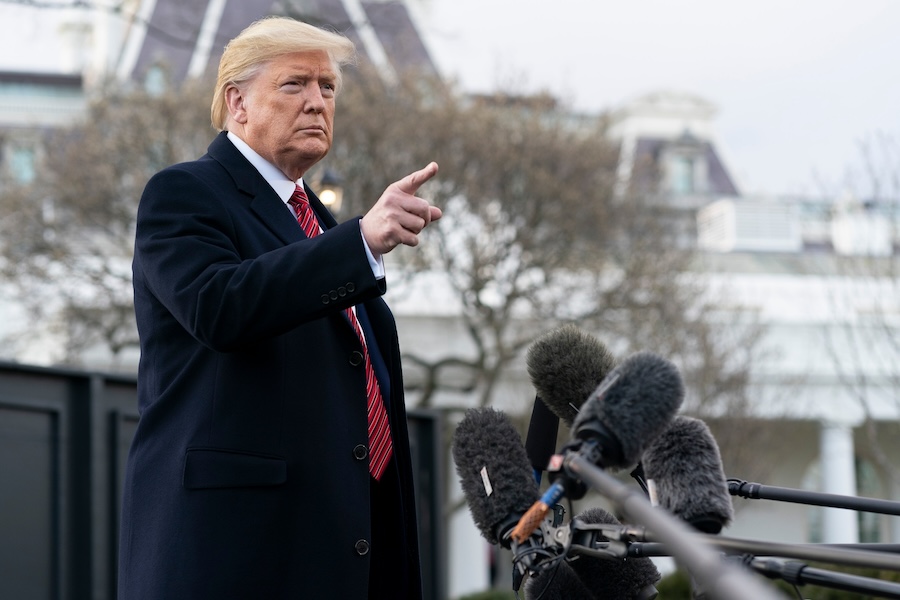
President Donald Trump unloaded on the U.S. Supreme Court on Sunday after the justices blocked Missouri from using its controversial 2025 congressional map in the upcoming midterm elections — a decision with potentially significant consequences for control of the U.S. House.
The map, which Missouri used during this year’s primary elections, was designed in a way that could have given Republicans an opportunity to pick up another congressional seat. But after months of legal battles and conflicting court rulings, the Supreme Court put an end to its use in the November 3 general election.
Trump wasted little time responding.
“The Supreme Court of the United States will just not let Missouri have an Election Victory. They continuously, three times now, overrule Judges who came to the correct decisions,” Trump wrote in a social media post.
The president then praised Missouri Governor Mike Kehoe and those who fought to keep the new congressional districts in place.
“Thank you to the Governor, and all of the Great People of Missouri, who are fighting so hard for Fairness and Election Security. Such tremendous Spirit and Love of our Country. I won Missouri BIG, all three times, and I couldn’t be more proud of doing so. A great place — I love you all,” the president continued.
The Supreme Court’s Friday order brought another dramatic turn in a redistricting fight that has bounced between state and federal courts.
The order, issued without noted dissents, halted a federal appeals court directive that would have required Missouri to use the 2025 congressional map.
Timing proved critical.
According to the Supreme Court, ballots based on Missouri’s 2022 congressional districts had already been printed and mailed, while absentee, military and overseas voting was already underway.
Changing maps at that point, the justices wrote, “would usher in electoral chaos.”
The court consequently directed lower courts not to prohibit Missouri from using the 2022 map or require the state to implement the 2025 map for the 2026 congressional election.
The dispute traces back to Missouri Republicans’ decision to enact a new congressional map, known as House Bill 1, during a special legislative session.
Governor Mike Kehoe signed the measure on September 28, 2025.
The map significantly reconfigured congressional districts, including the Kansas City-based 5th Congressional District represented by Democrat Emanuel Cleaver. The redraw was intended to create another Republican-leaning congressional district in a state where Republicans currently control six of eight U.S. House seats.
But opponents quickly launched an effort to stop it.
People Not Politicians gathered signatures seeking a statewide referendum on the new map, relying on a provision of the Missouri Constitution that allows voters to review certain acts passed by the legislature.
Missouri Secretary of State Denny Hoskins declined to certify the petition, and the state’s August 4 primary elections proceeded using the 2025 congressional boundaries.
Then came another major reversal.
On September 3, the Missouri Supreme Court unanimously ruled that the referendum petition was legal, sufficient and timely.
That decision meant House Bill 1 had never taken effect and would remain suspended unless Missouri voters ultimately approved it.
What followed was an extraordinary series of conflicting court decisions.
Justice Brett Kavanaugh initially denied an emergency request seeking to block the Missouri Supreme Court ruling.
Minutes later, however, a federal district judge issued an order requiring Missouri to use the 2025 congressional map.
The U.S. Supreme Court subsequently stayed that order.
A federal appeals court then entered the fight, concluding that conducting the primary and general elections under different congressional maps would violate the Constitution. The appeals court directed Missouri to return to the 2025 map.
Once again, the Supreme Court intervened and blocked the ruling.
The result is now clear for November.
Missouri will conduct its November 3 general election using the state’s 2022 congressional districts, despite having conducted its August primary under the newer boundaries.
At the same time, Missouri voters will decide the referendum determining whether the 2025 congressional map should be approved for future use.
Governor Kehoe has said Missouri will comply with the Supreme Court’s order, bringing the immediate legal fight over which map will govern the upcoming general election to a close.

NEW: Justice Alito Abruptly Reverses Course In Key SCOTUS Case

National Emergency Declared — Trump Called In

Seat Officially Flipped After HUGE Win and Election Upset

ALERT: Trump Set To Make ‘Special Announcement’ From Oval Office

CEO Charged In Scheme To Infiltrate Secret Service

Trump Torches Supreme Court Over Controversial New Ruling

‘The Five’ Gets Emotional As Greg Gutfeld Announces Tragic News

Joe Biden’s Daughter Just Dropped Massive Public Bombshell On Her Dad

Removed From the Country — Ilhan Omar Hit With Horrid News

Obama Calls It QUITS After Wild Video Goes Viral

Get Ready — Mike Pence Makes Stunning 2028 Announcement

Schumer Loses! Court Sides With Trump In Historic Move
-
 Economy6 months ago
Vance Leaves Meeting, Looks Straight Into Camera, Announces Stunning Arrest
-
 Economy6 months ago
Adam Schiff Facing 30 Years In Prison After Bank Records Leak
-
 Economy6 months ago
Supreme Curt Sides With Trump — He Can Remove The All
-
 Culture3 months ago
Michelle Obama Drops Nasty Bomb About ‘Useless’ Daughter
-
 Economy6 months ago
All Hell Breaks Loose On Fox When Jesse Watters Asks Fetterman One Question
-
 Economy4 months ago
Prayers Pour In After Fox Host Dies: ‘Senseless Murder’
-

 Latest3 months ago
Fox News Stuns With Announcement About 5 Fired Hosts
-

 Border & Security2 months ago
Top Trump Admin And Wife Found Dead — Chilling Update Just Released