
Politics
Trump DOJ fires prosecutors tied to FACE Act cases after report alleges bias and misconduct


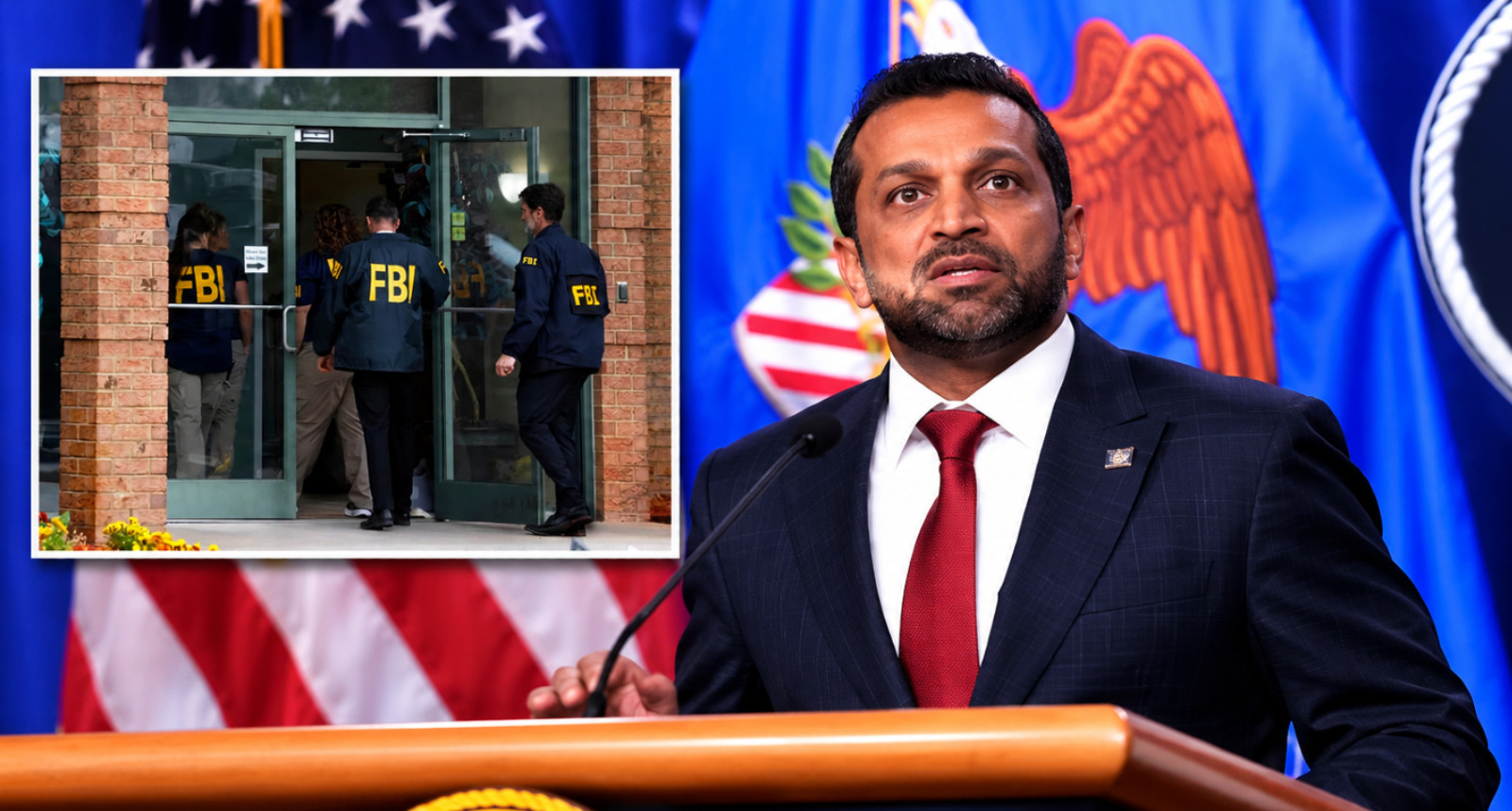
One of Virginia’s most powerful Democratic lawmakers surrendered to federal authorities Thursday after prosecutors unveiled a sweeping indictment accusing her of participating in a criminal marijuana operation, laundering money and exploiting her political influence for financial gain.
Virginia state Sen. Louise Lucas, 82, faces five federal charges stemming from an investigation into what prosecutors describe as a criminal organization involving members of her family and close associates.
The indictment, unsealed in the Eastern District of Virginia, names Lucas and six additional defendants in an alleged operation that federal investigators say stretched from approximately 2019 through 2026.
Attorney General Todd Blanche announced the charges alongside FBI Director Kash Patel and federal prosecutors in Norfolk, outlining allegations against a lawmaker who has spent more than three decades wielding considerable influence in Richmond.
Lucas, who serves as president pro tempore of the Virginia Senate and chairs the powerful Senate Finance and Appropriations Committee, is accused of using her positions to advance and protect the alleged operation.
The five charges against her include racketeering conspiracy, conspiracy to distribute and possess with intent to distribute marijuana, conspiracy to launder money, conspiracy to commit honest-services fraud through bribery, and maintaining a drug-involved premises.
Federal prosecutors allege the organization, identified in the indictment as the “Lucas Enterprise,” acquired and distributed more than 100 kilograms of marijuana while moving proceeds through financial transactions intended to conceal their origins.
Investigators further contend that Lucas used her political authority to shield the alleged enterprise from scrutiny and pursue legislative policies that could financially benefit herself and her associates.
The accusations place the longtime Democratic power broker at the center of a major federal corruption prosecution just days before the November 3 midterm elections.
Blanche accused Lucas of violating the public trust, arguing that the indictment describes a politician who allegedly placed her own financial interests ahead of her constituents.
At the center of the investigation is The Cannabis Outlet, a Portsmouth business in which Lucas has publicly acknowledged holding an ownership interest.
Prosecutors allege that the business played a role in the broader operation.
Virginia currently permits adults to possess marijuana, but the state has not established a functioning regulated recreational retail market. Certain hemp and cannabis-derived products can be sold legally under existing state law.
Lucas has been a prominent advocate for marijuana legalization, a position that has drawn additional attention following prosecutors’ allegations that she pursued policies potentially benefiting businesses connected to the alleged enterprise.
The investigation first became public in May when FBI agents executed court-authorized searches at Lucas’ Portsmouth office and The Cannabis Outlet.
The searches immediately sparked political controversy, with Lucas suggesting that federal authorities were targeting her because of her opposition to President Donald Trump.
However, multiple reports indicate that the investigation began during former President Joe Biden’s administration, before Trump returned to the White House.
Federal investigators also reportedly obtained court authorization to conduct wiretaps as part of the investigation.
Court records indicate that journalists, politicians and other individuals subsequently received notifications that their communications involving Lucas had been intercepted.
The federal indictment names six additional defendants: Lisa Lucas Burke, Prince Albert William Hudson III, Ryan Eichelberger, Theresa Lucas-Lamb, Carlton Upton Jr. and Tameka Johnson.
The broader eight-count indictment includes allegations involving marijuana distribution, money laundering, honest-services fraud, firearms and wire fraud.
The specific charges differ among the defendants, and the allegations have not been proven in court.
For Lucas, the indictment represents a major legal challenge after more than three decades as a fixture in Virginia Democratic politics.
First elected to the state Senate in 1992, Lucas rose through the Democratic ranks to become one of the Commonwealth’s most influential legislators.
As president pro tempore and chairwoman of the Senate Finance and Appropriations Committee, she holds significant authority over legislative proceedings and state spending priorities.
Lucas also played a prominent role in Virginia Democrats’ unsuccessful attempt to redraw congressional districts ahead of the midterm elections.
That effort was ultimately blocked by the Virginia Supreme Court.
The timing of the federal indictment has become another point of contention, with Lucas and her allies questioning whether political considerations influenced the prosecution.
Following the FBI searches in May, Lucas repeatedly characterized the investigation as politically motivated and accused the Trump administration of attempting to intimidate a political opponent.
Her legal team continued challenging the prosecution Thursday.
Attorney Brian Woolfolk dismissed the proceedings as “the circus we always expected it to be” and indicated that the defense would await additional information before issuing a more detailed response.
Blanche rejected suggestions that the indictment’s timing was improper because of the approaching November 3 elections.
He pointed out that Lucas herself is not on the ballot and maintained there was “nothing improper” about bringing the charges at this time.
The prosecution now sets up a high-profile legal battle involving allegations of organized drug distribution, financial crimes and the misuse of public office.
Federal authorities will have to prove that Lucas knowingly participated in the alleged criminal conduct and that the evidence supports each charge brought against her.
Lucas and her co-defendants are presumed innocent unless proven guilty.
For a lawmaker who has spent more than 30 years at the center of Virginia politics, the stakes are substantial: Federal prosecutors are accusing one of the state’s most influential Democrats of helping operate a criminal enterprise while using the powers of her public office to advance its interests.
The case now moves into federal court, where the government’s allegations will face scrutiny and Lucas will have an opportunity to contest the charges.

Rep. Ilhan Omar (D-MN) is facing renewed scrutiny after delivering an unexpected response during a television interview about longstanding allegations involving her former husband, Ahmed Nur Said Elmi.
During an appearance on MS NOW with host Chris Hayes, the Minnesota Democrat was directly questioned about claims that Elmi, whom she legally married in 2009, was actually her brother.
Omar has repeatedly rejected the allegation, previously describing it as a “disgusting lie.”
But when Hayes pressed her to confirm that she and Elmi were not related, her response drew attention.
“Not to my knowledge.”
Ilhan Omar denies that she married her brother: “Not to my knowledge.” https://t.co/uxRq3i08zP
— TheBlaze (@theblaze) October 22, 2026
The exchange came after Hayes asked Omar to explain the origins of the allegation, identify her former husband and address whether there was any factual basis for the claims.
Omar maintained that the accusation originated on a Somali online forum before spreading through Minneapolis political circles.
She said individuals later claimed she had introduced Elmi as her brother, an assertion she described as “insane.”
The congresswoman insisted that she did not know the people making those claims.
Hayes then attempted to clarify the issue, asking whether Omar was related to Elmi in any way and whether there was “not some weird kernel of truth” behind the allegations.
Rather than simply repeating her previous denial, Omar answered, “Not to my knowledge.”
The remark has become a focal point of the controversy, although it does not establish that Omar and Elmi are related or that any wrongdoing occurred.
Questions surrounding Omar’s marital history have followed the congresswoman for years.
According to her own account, Omar entered a faith-based marriage with Ahmed Hirsi, the father of her children, in 2002. That marriage was not legally formalized.
In 2009, she legally married Elmi, a British citizen of Somali descent.
Omar has stated that she and Elmi separated through a faith-based process in 2011, although their legal divorce was not finalized until 2017.
She has also said she reconciled with Hirsi before legally marrying him in 2018.
That marriage ended in divorce in 2020, the same year Omar married her current husband, political consultant Tim Mynett.
The complicated timeline has fueled years of public questions about her marital relationships, although the allegations that she married a sibling remain unproven.
According to the supplied report, Elmi previously submitted an application for a marriage-based green card that was subsequently withdrawn after immigration authorities requested additional supporting evidence.
The interview also comes amid reports of a federal investigation examining Omar’s immigration history.
According to those reports, Homeland Security Investigations agents executed a judicially authorized search warrant at Omar’s Washington, D.C., residence on October 12.
Investigators reportedly removed several items, including a cellphone, computers, notebooks and a passport.
The reported investigation concerns possible false statements and immigration fraud, including questions about citizenship paperwork submitted around 2000 and whether Omar or her late father misrepresented her age.
Investigators have also reportedly obtained DNA material, although no public laboratory findings establishing a familial relationship between Omar and Elmi have been released.
Another development described in the report involves a Department of Justice court filing responding to requests from news organizations and Judicial Watch to unseal materials connected to the search warrant.
The filing reportedly identified the subject as “Congresswoman Ilhan Nur Said Elmi, a/k/a Ilhan Abdullahi Omar.”
The report states that the name “Ilhan Nur Said Elmi” was associated with Omar’s 2009 marriage to Elmi, while “Ilhan Abdullahi Omar” appeared as an alias.
The use of those names in a legal filing does not, by itself, establish that the congresswoman committed fraud or that the allegations about her former husband’s identity are true.
Federal prosecutors reportedly requested additional time to respond to the applications seeking disclosure of the warrant materials, explaining that the warrant had not yet been fully executed.
A federal magistrate judge had also reportedly imposed restrictions on certain aspects of the search because of Omar’s status as a sitting member of Congress.
Despite the reported investigation and renewed attention surrounding her interview, no criminal charges had been filed against Omar at the time of the original report.
The allegations involving her former husband remain disputed, and no publicly disclosed DNA findings have established that the two are siblings.
Nevertheless, the interview has brought fresh attention to a controversy Omar has spent years attempting to put behind her.
At the center of the renewed scrutiny is one brief exchange: When directly asked whether she was related to the man she married in 2009, Omar answered, “Not to my knowledge.”
Whether additional evidence emerges to resolve the longstanding allegations remains an open question.

Federal authorities have arrested a 17-year-old Texas teenager accused of plotting to assassinate Republican Rep. Keith Self at a public event in McKinney, Texas, as part of an alleged ISIS-inspired terrorist attack planned for North Texas.
According to federal law enforcement sources cited by WFAA, the FBI arrested the teenager on October 5 after investigators learned he had obtained a firearm, escalating concerns about a potential attack targeting the congressman.
The suspect, whose identity has not been publicly released because of his age, faces federal charges connected to the alleged assassination plot. Prosecutors are reportedly seeking to have him tried as an adult.
Investigators believe the teenager had recently become radicalized after consuming ISIS propaganda online and was already under federal surveillance before his arrest.
Authorities reportedly moved in after discovering that he had acquired a gun, preventing the alleged plot from advancing further.
The intended target was Rep. Self, a Republican representing Texas’ 3rd Congressional District and a 25-year military veteran.
According to investigators, the teenager allegedly planned to attack Self on October 17 while the congressman was scheduled to judge a chili cook-off at a Veterans of Foreign Wars post in McKinney.
The alleged assassination attempt was reportedly part of a broader terrorist plot targeting North Texas that same weekend.
A federal law enforcement source briefed on the investigation told WFAA that the planned violence was inspired by ISIS, the terrorist organization responsible for deadly attacks around the world.
Self confirmed that he and his family were safe following the suspect’s arrest and issued a statement addressing the threat.
“Protecting our Constitutional Republic from radical Islam is getting messy. I served in the military for 25 years with the mindset that defending freedom was worth the sacrifice. Our elected leaders should govern with that same mindset,” the congressman told WFAA.
The reported plot raises serious questions about the continued threat of online terrorist recruitment and the ability of extremist organizations to influence individuals inside the United States.
According to the report, the teenager’s alleged radicalization occurred through ISIS-related material available online, highlighting concerns about extremist propaganda reaching young Americans.
Federal authorities had reportedly been monitoring the suspect before he obtained the firearm, allowing agents to intervene more than a week before the planned October 17 attack.
The congressman was also asked whether his outspoken positions on radical Islam may have contributed to his selection as a target.
Self acknowledged that he suspected a connection but emphasized that he could not establish the alleged attacker’s motive with certainty.
“If it’s ISIS related, you kind of have to believe that. I can’t prove that. I don’t know that for sure. But you have to follow the [old saying] if it walks like a duck and quacks like a duck, it’s probably a duck,” he said.
The alleged assassination plot comes amid continuing concerns about threats directed at elected officials and the potential for extremist violence at public political events.
The fact that Self was reportedly targeted while preparing to attend a community chili cook-off underscores the security challenges facing lawmakers who regularly interact with constituents outside heavily protected government facilities.
Self later released a separate statement on X thanking federal investigators for stopping the alleged attack and declaring that the threat would not prevent him from carrying out his responsibilities in Congress.
“I am grateful to the FBI and law enforcement for stopping this threat. My family and I are safe, and I remain focused on serving the people of Texas’ 3rd District. Preserving our constitutional republic from radical Islam means accepting the costs that come with it—name-calling, threats, and worse. Our Founders believed this country was worth the sacrifice. I served 25 years in the military because defending freedom was worth the sacrifice. This only strengthens my resolve. I will not back down,” the congressman said.
The suspect reportedly remains in federal custody as prosecutors pursue the case.
Because the accused is a juvenile, authorities have not publicly disclosed his identity, and additional details about the alleged plot remain limited.
The Justice Department and FBI had not released a separate public statement outlining further evidence or specific case details at the time of the original report.
The allegations have not been proven in court, and the suspect is presumed innocent unless proven guilty.
For now, the reported arrest has prevented the alleged October 17 attack from taking place, while federal prosecutors seek to move forward with the case against the teenager.
The case centers on a chilling allegation: A 17-year-old who investigators believe was radicalized by ISIS propaganda allegedly obtained a firearm and planned to assassinate a sitting member of Congress at a community event before federal agents intervened.

NEW: Trump Vows To Prosecute His Own STAFF!

Trump Just Activated ‘Level 3’ — It’s Serious

Powerful Dem Senator Arrested 12 Days Before Midterms

Ilhan Omar Gives Jaw-Dropping Answer When Asked If She Married Her Brother

Man Arrested For ISIS-Linked Assassination Plot Targeting GOP Congressman

JUST IN: Sarah Palin Makes Heartbreaking Announcement

Charlie Kirk’s Mother Breaks Her Silence After Erika Kirk’s Public Statement

National Emergency Declared — Trump Called In

Michelle Obama Public Disaster — Photos Explode Across D.C.

Feds Raid Ilhan Omar’s Home — Make Horrifying Discovery

ALERT: Trump Set To Make ‘Special Announcement’ From Oval Office

Fireworks Erupt On Capitol Hill After 52-45 Vote For Trump!
-
 Economy6 months ago
Vance Leaves Meeting, Looks Straight Into Camera, Announces Stunning Arrest
-
 Economy6 months ago
Adam Schiff Facing 30 Years In Prison After Bank Records Leak
-
 Culture4 months ago
Michelle Obama Drops Nasty Bomb About ‘Useless’ Daughter
-
 Economy6 months ago
Supreme Curt Sides With Trump — He Can Remove The All
-
 Economy7 months ago
All Hell Breaks Loose On Fox When Jesse Watters Asks Fetterman One Question
-
 Economy5 months ago
Prayers Pour In After Fox Host Dies: ‘Senseless Murder’
-
 Border & Security3 months ago
Top Trump Admin And Wife Found Dead — Chilling Update Just Released
-

 Latest4 months ago
Fox News Stuns With Announcement About 5 Fired Hosts