
Culture
Netflix Faces Backlash Over ‘Sick’ Post On Anniversary Of Charlie Kirk’s Assassination

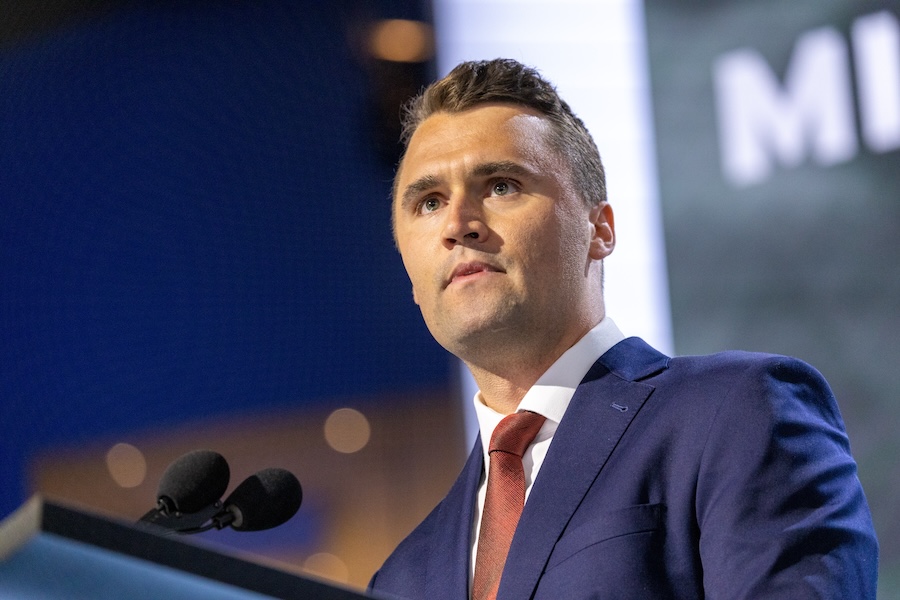
Netflix is facing a wave of backlash after its UK & Ireland account posted a joke about a “neck injury” Thursday morning — exactly one year after Charlie Kirk was fatally shot in the neck during his assassination at Utah Valley University.
The timing immediately set social media ablaze.
At 8 a.m. Thursday, the official Netflix UK & Ireland account shared a series of promotional images accompanied by a seemingly routine caption:
“Nearly did himself a neck injury.”
Under virtually any other circumstances, the joke might have passed unnoticed outside fans of the streaming platform’s programming.
But Thursday wasn’t just any day.
September 10 marks exactly one year since Charlie Kirk was assassinated.
The 31-year-old Turning Point USA founder was speaking before a large outdoor crowd at Utah Valley University in Orem, Utah, on Sept. 10, 2025, when he was struck by a single gunshot to the neck.
That horrifying detail made Netflix’s choice of words impossible for some social media users to ignore.
‘You Guys Are Sick’
The backlash erupted quickly.
Libs of TikTok was among the accounts blasting Netflix over the post, writing:
“I’m so glad I canceled my subscription. You guys are sick.”
The criticism came as Americans across the country were marking the first anniversary of Kirk’s assassination with tributes, remembrances and reflections on his political legacy.
But the anniversary has also taken a much darker turn in some corners of social media.
Some left-wing users have circulated jokes and memes about Kirk’s killing, with some reportedly referring to Sept. 10 as “Kirkiversary.”
Other viral posts have explicitly referenced the location of Kirk’s fatal wound.
Against that disturbing online backdrop, Netflix’s otherwise unrelated reference to a “neck injury” immediately raised suspicions among some users.
Was Netflix Actually Referencing Kirk?
There is an important distinction.
There is no evidence that Netflix’s post was deliberately referencing Charlie Kirk or his assassination.
The post appears to have been promoting unrelated Netflix programming, and the wording could very plausibly have been nothing more than an extraordinarily unfortunate coincidence.
But the timing — coupled with the very specific reference to a neck injury — was enough to ignite a firestorm.
And the post didn’t simply disappear into the endless stream of social-media content.
By Thursday afternoon, Netflix UK & Ireland’s post had reportedly amassed more than 2 million views on X.
The controversy quickly became part of a much broader and uglier conversation unfolding online on the anniversary of Kirk’s killing.
One Year Since The Assassination
Kirk was killed by a single gunshot while speaking to a large crowd during an outdoor event at Utah Valley University.
Tyler Robinson has pleaded not guilty to seven charges connected to Kirk’s killing, including aggravated murder.
Earlier this month, a Utah judge ruled that prosecutors had presented sufficient evidence for the case to move forward to trial.
Prosecutors are seeking the death penalty.
Meanwhile, Kirk’s assassination has again become a major topic across social media as supporters remember the conservative activist and Turning Point USA founder one year after his death.
That has made Thursday’s online atmosphere particularly raw.
For many of Kirk’s supporters, seeing jokes about his killing on the anniversary itself has already been deeply disturbing.
Then came Netflix’s post.
A Coincidence — Or Something More?
That is ultimately the unanswered question at the center of the controversy.
There is currently no evidence establishing that whoever wrote Netflix’s “neck injury” caption had Charlie Kirk in mind.
It may have been nothing more than terrible timing.
But in the current online environment — on the exact anniversary of a political assassination involving a fatal gunshot to the neck — the wording was always likely to attract attention once users made the connection.
And they certainly did.
What might have been an otherwise forgettable promotional post exploded into a viral controversy, drawing millions of views and accusations that Netflix had crossed an unthinkable line.
Whether the wording was an innocent coincidence or something more deliberate remains unknown.
But one thing is undeniable:
On the first anniversary of Charlie Kirk’s assassination, a Netflix post joking about a “neck injury” was enough to ignite a furious backlash across social media.


For decades, Dolly Parton gave America her music, her unmistakable sense of humor and a larger-than-life dose of Southern charm.
But when the country music legend reportedly faced one of the most difficult battles of her life, she made a deeply personal decision: she didn’t want the people who loved her to worry.
Now, her sister Stella Parton is revealing heartbreaking new details about Dolly’s private cancer battle — including just how determined the beloved entertainer was to keep her illness out of the public eye.
During an interview with “CBS Mornings,” Stella said Dolly intentionally kept her diagnosis from her millions of fans — and even from some members of her own family.
The reason was quintessentially Dolly.
“Well, Dolly did not want anybody to tell that, because Dolly could not bear negative things, and she would not have wanted her fans worried about it,” she shared. “She didn’t want a lot of the family worried about it. Some of us knew, the ones that were closer, but not every relative.”
In her first interview since her sister, Dolly Parton, died last month, @StellaParton exclusively tells @GayleKing that Dolly did not want people to know she was sick: “She did not want people sad, and she did not want people worried.”
More from their interview airs Thursday on… pic.twitter.com/vrmM0f8CjQ
— CBS Mornings (@CBSMornings) September 9, 2026
Dolly died Aug. 25 at age 80 following a brief battle with cancer, leaving generations of fans stunned.
For millions who had followed her remarkable career, there had been little indication that the woman behind classics like “Jolene” and “I Will Always Love You” was privately facing such a serious illness.
America Says Goodbye To A Country Music Icon
Dolly’s nephew, Bryan Seaver, announced her death on Instagram, remembering not only the extraordinary career that made his aunt one of America’s most recognizable entertainers, but also the generosity that became such a defining part of her life.
Then came an extraordinary outpouring of grief.
Musicians, actors, fellow entertainers and ordinary Americans flooded social media with tributes.
For Stella, seeing that overwhelming display of affection carried special meaning because she knew how much it would have meant to her sister.
“She’d be really happy and delighted that people have shown her so much love because she knew that that would make us feel better as her family,” Stella said. “Bottom line, end of the day, her family and Carl’s family and probably Judy’s family are the people that she would want to say, ‘See, everything I did, they cared. They really loved me.”
Those words capture something that awards and record sales never could.
Behind one of the biggest personalities in entertainment was a woman who apparently cared so deeply about the people around her that, even while confronting cancer, she didn’t want them burdened with fear for her.
From The Hills Of Tennessee To An American Legend
Dolly’s story was a quintessential American success story.
Her meteoric rise began in 1967 when she joined “The Porter Wagoner Show,” giving the young Tennessee singer a national platform that would ultimately help launch one of the most celebrated careers in country music history.
By 1974, Dolly was ready to leave Wagoner’s program and strike out on her own.
As she prepared to say goodbye, she wrote a song.
That song was “I Will Always Love You.”
Years later, Dolly recalled the extraordinary moment she first performed it privately for Wagoner.
“I sang the song alone in his office — just me and my guitar,” she told Howard Stern in 2023, adding that he replied, “That’s the best song you’ve ever wrote … You can go if I can produce the song.”
The rest became music history.
Dolly went on to win 10 Grammy Awards and receive a Kennedy Center Honor while earning induction into the Country Music Hall of Fame, Rock & Roll Hall of Fame and Songwriters Hall of Fame.
But trophies only tell part of her story.
A Legacy Far Bigger Than Music
Perhaps one of Dolly’s most enduring accomplishments didn’t happen on a stage at all.
Through her Imagination Library, Parton helped provide books to children regardless of their families’ financial circumstances.
It was a mission rooted in the same East Tennessee upbringing that shaped so much of her music — and her life.
“When I was growing up in the hills of East Tennessee, I knew my dreams would come true,” Dolly said in a statement on the organization’s website. “I know there are children in your community with their own dreams. They dream of becoming a doctor or an inventor or a minister.
For Dolly, giving those children an opportunity to dream became part of a legacy that stretched far beyond entertainment.
She became a country superstar without forgetting where she came from.
She accumulated fame without allowing fame to become the entirety of her identity.
And according to her sister, even while privately confronting cancer, Dolly remained concerned about how everyone else would feel.
She didn’t want her fans worrying.
She didn’t want her extended family worrying.
She wanted to protect the people who loved her from the burden she was carrying.
For a woman who spent a lifetime giving so much of herself to others, perhaps there couldn’t have been a more fitting final act.
Dolly Parton’s music will continue playing for generations.
But the generosity, faith, family values and unmistakable warmth behind that music may prove to be an even greater legacy.
And judging by the extraordinary outpouring that followed her death, Stella was right about one thing:
They really loved her.
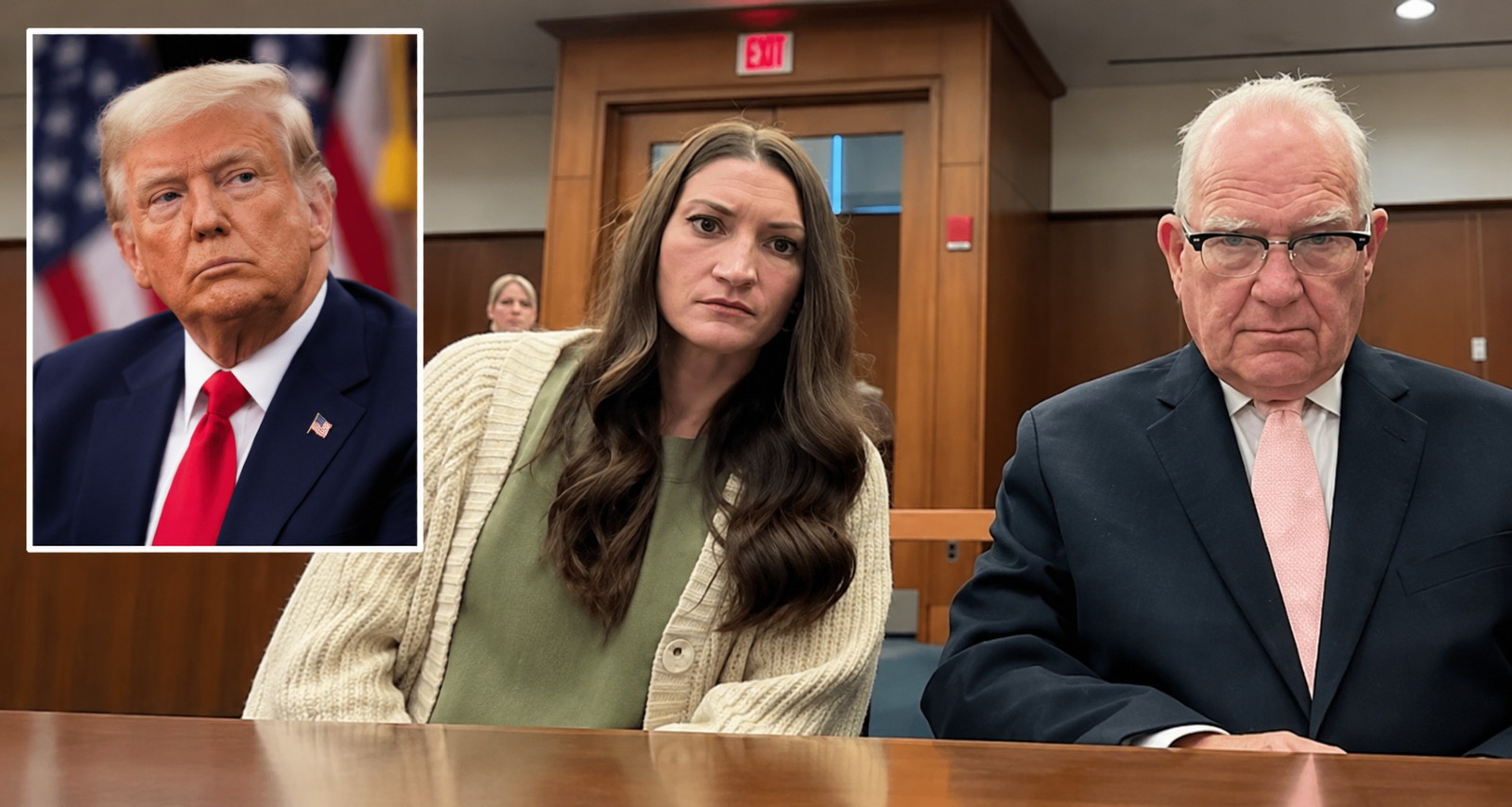
Lindsay Clancy’s defense attorney is taking his fight all the way to President Donald Trump — with an extraordinary public plea following the dramatic mistrial in her triple-murder case.
There’s just one enormous problem:
Trump doesn’t have the constitutional power to do what he’s asking.
Attorney Kevin Reddington publicly called on Trump to consider pardoning Clancy, the Massachusetts mother charged with killing her three young children, despite the fact that presidents cannot pardon defendants for state crimes.
The remarkable appeal came just days after Trump himself weighed in on the nationally watched case, saying Clancy would ultimately face “a price” through prison, a mental institution or another legal outcome.
Now Reddington is asking the president to look at Clancy’s background and history of severe mental-health problems before Massachusetts prosecutors decide whether to put her through another trial.
“Mr. President, I would hope that you would consider this young lady, the type of person she is, what she has been through, and consider a pardon,” Reddington said during a television interview Tuesday.
There’s One Major Constitutional Problem
The request immediately runs headfirst into the Constitution.
Article II gives the president power to grant pardons only for “Offenses against the United States.”
In other words: federal crimes.
Clancy’s case is being prosecuted entirely under Massachusetts state law.
That means Trump cannot pardon Clancy, dismiss her charges or otherwise use presidential clemency powers to end the prosecution.
The Justice Department has similarly made clear that presidential clemency does not extend to state convictions. Relief from state criminal charges must come through the appropriate state process.
Reddington has acknowledged that legal reality.
But he appears to be looking for something else from Trump: influence.
The defense attorney has suggested the president could still use his enormous public platform to weigh in as Clancy’s attorneys push prosecutors toward another resolution rather than a second trial.
Three Children Dead, One Question Divided The Jury
Clancy, 36, is charged in the January 2023 deaths of her three children — Cora, 5, Dawson, 3, and Callan, just 8 months old — inside the family’s Duxbury home.
Her attorneys do not dispute that Clancy killed the children.
The explosive question at trial was whether she was criminally responsible when she did it.
Her defense argued that Clancy was suffering from severe mental illness, including postpartum psychosis, and therefore could not be held legally responsible for her actions.
Prosecutors fiercely disagreed.
They argued that Clancy understood what she was doing and deliberately carried out the killings, pointing to evidence they said demonstrated planning and awareness.
After a grueling six-week trial, jurors spent approximately 38 hours deliberating.
They couldn’t reach a unanimous verdict.
Defense attorneys have said the final split was 11-1 in favor of finding Clancy not criminally responsible, though the individual jurors had not all publicly confirmed their votes.
The deadlock forced a mistrial.
And that means this case is far from over.
Prosecutors Could Put Clancy On Trial Again
A mistrial is neither an acquittal nor a conviction.
Massachusetts prosecutors remain free to try Clancy again.
Plymouth County District Attorney Timothy Cruz has not announced whether his office will pursue another trial, negotiate a resolution with Clancy’s attorneys or take another path.
Reddington has made clear what he wants.
He is urging prosecutors to avoid another lengthy trial and instead reach an agreement with the defense.
But there’s another line he says he won’t cross.
Reddington has said he would oppose any agreement requiring Clancy to serve prison time, arguing that she belongs in psychiatric treatment rather than behind bars.
The defense attorney has continued pointing to messages, medical treatment and Clancy’s attempts to seek help before the killings as evidence that she was suffering from serious psychiatric problems.
Prosecutors have countered that other evidence demonstrated planning and awareness inconsistent with the defense’s claim that Clancy lacked criminal responsibility.
Then Trump Entered The Picture
The already explosive case took another turn when Trump publicly weighed in following the mistrial.
The president called the deaths a “horrible tragedy” and indicated that he expected the legal process to continue.
Days later, Clancy’s attorney went on television and appealed directly to Trump.
It is a stunning development in a case that has already captivated the country.
But regardless of how Trump responds, the constitutional reality remains unchanged.
Donald Trump cannot pardon Lindsay Clancy for Massachusetts state charges.
Any decision about retrying Clancy remains in the hands of Massachusetts prosecutors, while any potential state clemency would have to come through Massachusetts — not the White House.
Clancy is scheduled to return to court on September 29, when attorneys are expected to discuss what comes next.
Until then, Reddington’s remarkable appeal to Trump could dramatically increase the political and public pressure surrounding the case.
But it cannot give the president a pardon power the Constitution simply does not provide.
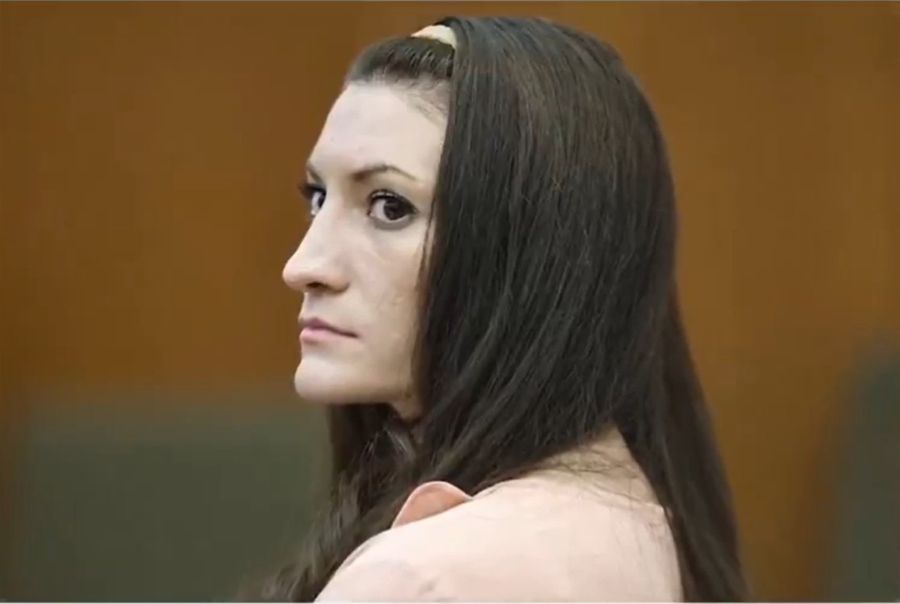
A juror who ultimately voted to acquit Lindsay Clancy by reason of insanity has now revealed a stunning detail about what happened behind closed doors:
She entered deliberations believing Clancy was guilty.
Juror No. 5, who has remained anonymous, said she initially believed the Massachusetts mother was criminally responsible for killing her three young children — before changing her vote during the tense deliberations that ultimately ended in an explosive 11-1 deadlock and mistrial.
‘Originally, I felt that she was guilty and she was criminally responsible for it.’
But even after ultimately siding with the majority of jurors who favored acquittal by reason of insanity, the woman admitted she still hasn’t completely shaken that belief.
‘Maybe I still believe that Clancy is guilty, in a certain way,’ she admitted.
The revelation offers a dramatic glimpse inside a jury room that became bitterly divided while deciding one of the most disturbing and closely watched murder cases in the country.
Three Children Dead — And A Jury Facing An Agonizing Question
Clancy, 36, is charged with killing her three children — Cora, 5, Dawson, 3, and Callan, just 8 months old — inside the family’s Duxbury, Massachusetts, home in January 2023.
Clancy admitted strangling the children with exercise bands but pleaded not guilty.
Her attorneys argued that she was suffering from postpartum psychosis so severe that she could not appreciate the wrongfulness of what she was doing.
Prosecutors presented a dramatically different case.
They maintained Clancy was criminally responsible and deliberately killed her children.
Juror No. 5 initially found herself leaning toward the prosecution.
And one piece of evidence in particular left her shaken: the 911 call made by Clancy’s husband, Patrick, after discovering the children.
‘I will never be the same after that 911 call,’ the juror said.
The recording was played inside the courtroom but has never been publicly released.
The juror also directly pushed back against online conspiracy theories accusing Patrick Clancy of killing the children and framing his wife.
‘If these people could have heard that visceral, blood-curdling scream,’ she said. ‘It was horrifying.’
Then Her Vote Changed
Despite entering deliberations believing Clancy was guilty, the juror said her view began shifting as the panel painstakingly examined the evidence surrounding Clancy’s mental state.
The question was no longer simply whether Clancy had killed her children.
She had admitted that.
The battle was over whether she was legally criminally responsible when she did it.
‘I think this was a woman who was not mentally healthy, she was in the throes of a significant mental crisis,’ the juror said.
‘I really just felt like she was so deep in it that she couldn’t see her way out, and this was the only option.’
As deliberations continued, the juror ultimately concluded prosecutors had failed to eliminate enough doubt for her to convict.
‘There was not a single moment throughout that presentation of that case that you could say, ‘Oh yep, 100 percent I’m certain she did it,” she recalled. ‘There is too much gray area.’
That conclusion moved her from believing Clancy was criminally responsible to joining the 11 jurors prepared to acquit her by reason of insanity.
But one juror refused.
One Holdout Stopped The Verdict
The jury’s inability to reach unanimity eventually came down to a single holdout.
Three other jurors who spoke publicly after the trial criticized the unidentified man for refusing to change his position.
Juror No. 5, however, offered a surprisingly different assessment.
‘This standalone juror was not the only one that was unwilling to see things from the other side, so I’m going to kind of defend that individual,’ she said.
She described a jury room filled with forceful opinions as the debate intensified.
‘There were some big personalities in that room, but at the end of the day, I feel like it just came down to an inability to move past your convictions.’
The deliberations reportedly became so heated that arguments could be heard from outside the jury room.
Other jurors have claimed the holdout acknowledged having reasonable doubt but nevertheless refused to return a verdict of not guilty by reason of insanity.
Foreperson Roni Carlson recalled believing at one point that the jury had finally broken through and reached an agreement.
Then the holdout refused again.
‘but I’m still not going to say she’s not guilty,’ Carlson recalled.
A Mistrial — And A Stunning Look Inside The Jury Room
After more than a week of deliberations failed to produce a unanimous verdict, Judge William Sullivan declared a mistrial on Sept. 4.
The final vote stood at 11-1.
But the latest revelation from juror No. 5 shows that the overwhelming final split tells only part of the story.
At least one of the 11 jurors ultimately prepared to acquit Clancy had walked into deliberations believing exactly the opposite.
She thought Lindsay Clancy was guilty.
Then, after days of examining the evidence, debating her mental state and wrestling with the legal standard for criminal responsibility, she changed her vote.
And even now, after the mistrial, her own words reveal just how unsettled she remains:
‘Maybe I still believe that Clancy is guilty, in a certain way.’

Netflix Faces Backlash Over ‘Sick’ Post On Anniversary Of Charlie Kirk’s Assassination

Dolly Parton’s Sister Reveals Heartbreaking New Details On Her Death

JUST IN: SCOTUS Shocks GOP With Brutal Ruling

Bombshell Arrest — Corrupt Mayor Mamdani’s Family Rocked

NEW: President Trump Reveals When It Will FINALLY End

Terrifying ‘Secret Weapon’ Built To Spy On Americans Spotted At Secret Location

Everyday Americans Being Treated As Criminals — Including You, Right Now

‘EFFECTIVE IMMEDIATELY’ — Barack Obama Gets Devastating News

Beloved Fox News Star Reveals New Cancer Diagnosis

Top Dem Forced To Resign In Disgrace After Being Caught In Act In Hotel
Terrifying ‘Secret Weapon’ Built To Spy On Americans Spotted At Secret Location

Dem BUSTED Who Faked Biden’s Signature For Him In Nasty Way
-
 Economy5 months ago
Vance Leaves Meeting, Looks Straight Into Camera, Announces Stunning Arrest
-
 Economy5 months ago
Adam Schiff Facing 30 Years In Prison After Bank Records Leak
-
 Economy5 months ago
Supreme Curt Sides With Trump — He Can Remove The All
-
 Culture3 months ago
Michelle Obama Drops Nasty Bomb About ‘Useless’ Daughter
-
 Economy5 months ago
All Hell Breaks Loose On Fox When Jesse Watters Asks Fetterman One Question
-
 Economy3 months ago
Prayers Pour In After Fox Host Dies: ‘Senseless Murder’
-

 Latest3 months ago
Fox News Stuns With Announcement About 5 Fired Hosts
-

 Economy5 months ago
NBC Stops LIVE Broadcast — Breaks Big Trump News