
Latest
A comedy prophecy finally comes true, and it turns out you’re not allowed to eat McNuggets on roller coasters

It’s finally Friday, so let’s end this week on a high note with another edition of Nightcaps!
Isn’t it wild how, despite it being a holiday week wherein many of us only have to work for four days, things just drag?
I’m not sure what it is, but Memorial Day already feels like it was a month ago.
But hey, that’s what happens when you’ve got your nose to the proverbial grindstone, and boy, have we ever this week.
I feel like I’ve been working from the time I wake up until the time I go to sleep, and that included the very last thing I do before going to sleep (unless you count listening to old-timey radio shows through my Bluetooth sleeping mask, in which case it was the second to last thing).
All week, we’ve been talking about Bryce Harper’s bizarre toothpaste habit where he squirts the toothpaste straight into his mouth instead of on the bristles.
A reader tried it out on Thursday, so I figured I had to do my job as a Big J Journalist and do it myself.
So last night, as I was brushing my teeth in my sink and my wife in hers, I switched things up and shot a glob of Colgate Optic White straight into my mouth.
My wife looked at me like I was insane.
“It’s for work,” I said.
That’s one of the best things about this job, by the way. I wasn’t lying. Nor was I lying when I mixed up a Cuban sandwich mimosa at 10 a.m. on a Tuesday or when I had to sift through Instagram models’ pages for gold.
Anyway, I was hoping for some sort of life-altering epiphany that this was the way to do toothpaste, but I did not get there. It actually felt kind of awkward because I have been brushing my teeth one way twice a day for 30 years, so switching things up felt like trying to write your name with your left hand when you’re right-handed.
Maybe try the Harper method for yourself, but don’t expect to come away with a life-altering experience… it was kind of dumb of me to expect that, honestly.
There is no singular comedy bit more famous, repeated and parodied than Abbot and Costello’s “Who’s on first?” bit.
If you really think about it, it makes no sense. I mean, we’re supposed to believe there’s a guy named “I Don’t Know” on third?
I get it, but it’s hard to wrap your mind around the fact that, at the time, for a lot of people, this was the funniest thing that had ever been created in the history of mankind up to that point.
GUESS WHICH ‘HAPPY DAYS’ STAR JUST SHOT A NUDE SCENE (SORRY, LADIES; IT WASN’T DON MOST)
While it feels dated, it’s a great bit by vaudeville standards, and now, after all of these years, Who — or rather, Hu — is finally on first.
How great is that?
While I was sawing logs, dreaming about being a Viking or going to algebra class without pants on, the folks at Jeff Bezos’ space company, Blue Origin — *Andrew Dice Clay voice* It need duh money!!!! — was preparing to launch a payload of satellites into orbit from Cape Canaveral.
It did not go well.
Alright, an “anomaly.”
Well, what kind of anomaly were we talking about?
…Oh yeah, that’s a big anomaly.
I’m not going to sit here and play armchair rocket scientist, but you usually don’t want rockets doing that.
The aftermath is not pretty, and unfortunately, this could have some serious consequences for Blue Origin and NASA too as we work toward putting astronauts on the moon once again.
That’s bad, but it’s not quite as bad as I was expecting. From the explosion, I didn’t think you’d be able to see any living vegetation in that photo. I thought everything that you’d be able to fit in frame would just be matchsticks.
Still, a huge bummer and maybe the “anomaly” of the century so far.
I think it’s always good to put things in perspective, and if you had a tough week, at least be thankful you didn’t get stuck on a roller coaster.
Especially not on the vertical lift hill.
I’m becoming less of a roller coaster guy than I used to be, and this is not helping me put a stop to that.
My wife and I went on the newly Muppet-ized Rock ‘N’ Roller Coaster at Disney’s Hollywood Studios recently, and while I had been on that ride many times when it was Aerosmith-themed, I hopped out of it woozy as hell.
Same track. Older Matt.
And that’s a roller coaster that is low to the ground. This kind of nonsense where I could get stuck up in the air like that and get motion sickness?
Nah, I think I’m going to pass on that.
Plus, they won’t even let you eat McNuggets on them anymore.
Speaking of roller coasters, we’ve got a fella who earned a lifetime ban from Six Flags — do you realize what you have to do to get banned from Six Flags — and it was all because he let other idiots on the internet tell him what to do.
A follower told him to eat McNuggets while on a roller coaster, and when a random person tells you to do something on social media, you have to do it.
Sorry, those are the rules. I don’t make them.
So, Allen Ferrell crammed some chicken nuggets in his pants and hopped on a roller coaster.
I think what got him banned was splashing sweet-and-sour sauce all over the people behind him, but I’m personally in favor of banning anyone who does something stupid somewhere in the name of social media clicks from that place.
Oh, what’s that? You need to visit the emergency room? Well, you should have thought of that before you ran through the waiting room in an inflatable T-Rex costume.
Let’s end on a high note…
We’ve talked about explosions and roller coasters and idiots eating McNuggets on a roller coaster, so let’s wrap up with the kind of thing that will send you into the weekend on a high note…
Dogs trying lemons!
ZERO BS. JUST DAKICH. TAKE THE DON’T @ ME PODCAST ON THE ROAD. DOWNLOAD NOW!
This has joined the pantheon of funny things dogs can do. It’s up there with kicking over obstacle course cones and playing poker in paintings.
…
That’s it for this Friday edition of Nightcaps!
Have a great weekend!
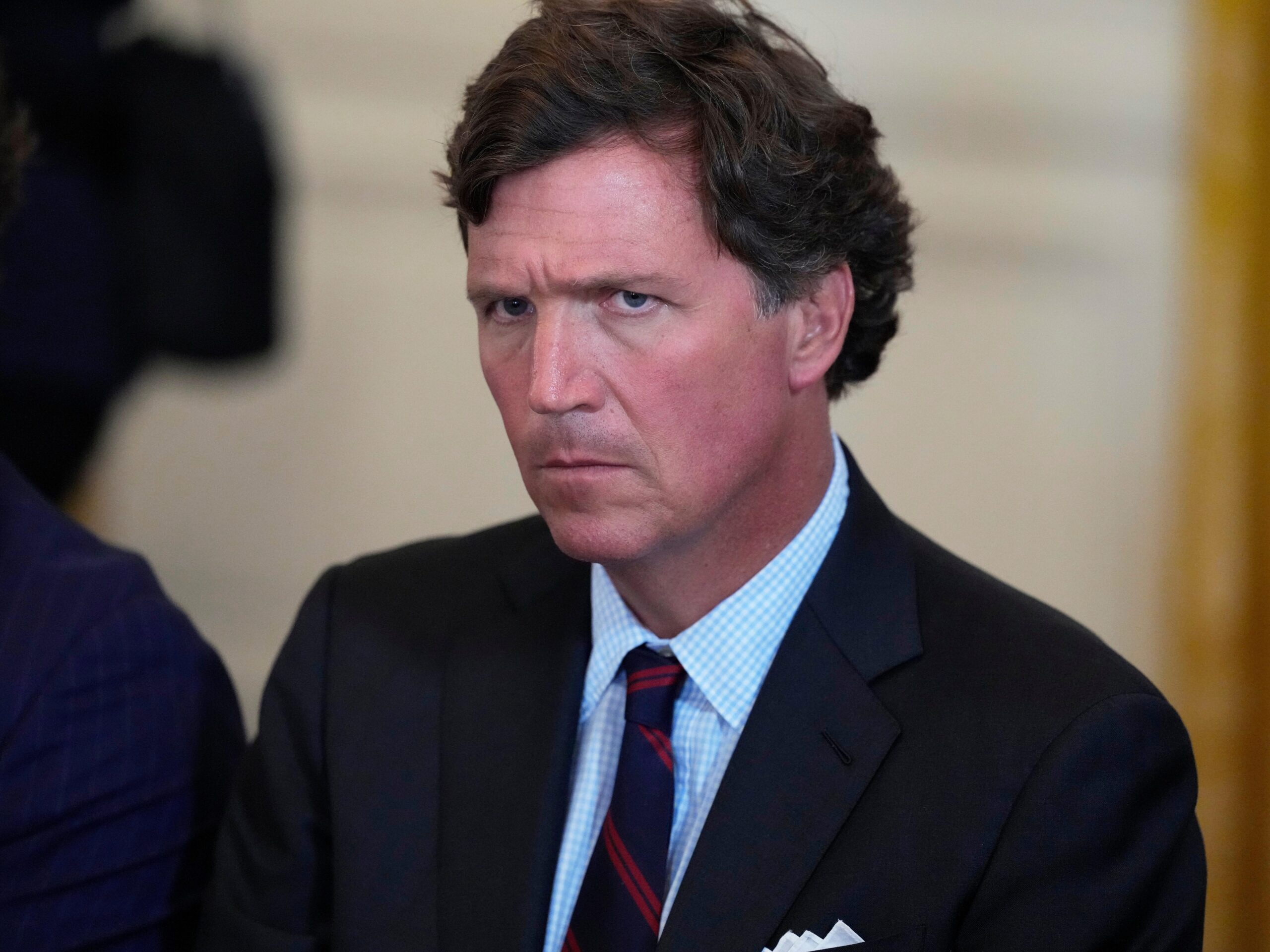
A growing divide within the conservative movement is becoming increasingly difficult to ignore, as longtime commentator Tucker Carlson declared that he no longer considers himself a Republican, citing frustration with what he sees as the party’s abandonment of its America First roots.
Carlson made the remarks during a podcast appearance with hosts Travis Dhanraj and Karman Wong, where the discussion turned to the political landscape ahead of the upcoming midterm elections and whether voters remain satisfied with the direction of the Republican Party.
While Carlson made clear that he remains aligned with many conservative principles, he argued that some Republican leaders have drifted away from the priorities that helped fuel President Donald Trump’s rise and transformed the GOP into the dominant force it is today.

“I’m out,” Carlson said during the interview.
“And if I’m out, then I think a lot of other people are out.”
Carlson’s comments came as he discussed polling data and voter sentiment ahead of the next election cycle.
“I would not support the Republican party. There’s no chance I would support the Republican party,” he said.
The former Fox News host argued that certain Republican lawmakers had betrayed their voters by supporting policies he believes put foreign interests ahead of American priorities.
“How could I or any American voter support a political party that’s not loyal to the United States? That puts the interests of a foreign country above those of its own citizens?
“It’s not possible to vote for people like that, and I’m not going to.”
Carlson’s remarks highlight a growing debate inside conservative circles over the future direction of the Republican Party.
At the center of the disagreement is not President Trump himself, but rather how some Republicans have approached foreign policy, military intervention, and America’s role overseas.
Trump built his political movement on the promise of putting American interests first, securing the border, rebuilding the economy, restoring energy independence, and avoiding the endless foreign conflicts that frustrated many voters for decades.
Many of Trump’s supporters continue to view the America First agenda as one of the defining achievements of his political movement.
Carlson suggested that some Republicans have lost sight of those principles.
“I think I’ve voted Republican my entire life,” Carlson said.
“I’ve been a consistent defender for 35 years, of the Republican party. I mean, a very consistent defender.”
“But there’s no defending this because it’s immoral and it’s exactly the opposite of what a political party in a democracy is charged with doing — which is representing its own voters, its own citizens, its own nation.”
“And they’re not doing that,” Carlson concluded.
The comments come amid an ongoing debate among conservatives regarding foreign policy, particularly following recent tensions involving Iran and the broader Middle East.
Carlson has been one of the most vocal advocates of a non-interventionist approach that emphasizes American interests above foreign entanglements. Other conservatives, including commentators and lawmakers aligned with a more traditional hawkish worldview, have argued that a strong American presence abroad remains necessary to protect national security.
The disagreement intensified after military operations involving Iran earlier this year, with Carlson and several other prominent voices warning against policies they believe could lead to deeper involvement in overseas conflicts.
Despite those disagreements, Carlson has generally continued to support many of Trump’s domestic policies, including border security, immigration enforcement, energy production, and efforts to prioritize American workers and taxpayers.
The broader divide illustrates the ongoing evolution of the Republican Party under Trump’s influence.
For decades, the GOP was largely defined by traditional establishment conservatives who favored aggressive foreign policy and intervention abroad. Trump’s rise fundamentally reshaped that coalition, bringing millions of working-class voters, independents, and populist conservatives into the party.
Today, debates like the one Carlson has raised reflect a larger question facing Republicans: how closely the party will adhere to the America First principles that helped fuel Trump’s political success.
Whether Carlson ultimately returns to the Republican fold remains to be seen. But his comments underscore a reality that many political observers have noted in recent years: the future of the conservative movement is increasingly being shaped by debates over foreign policy, national sovereignty, and what it truly means to put America first.
As those discussions continue, one thing remains clear: the America First movement that transformed Republican politics is still driving much of the conversation inside the conservative movement today.
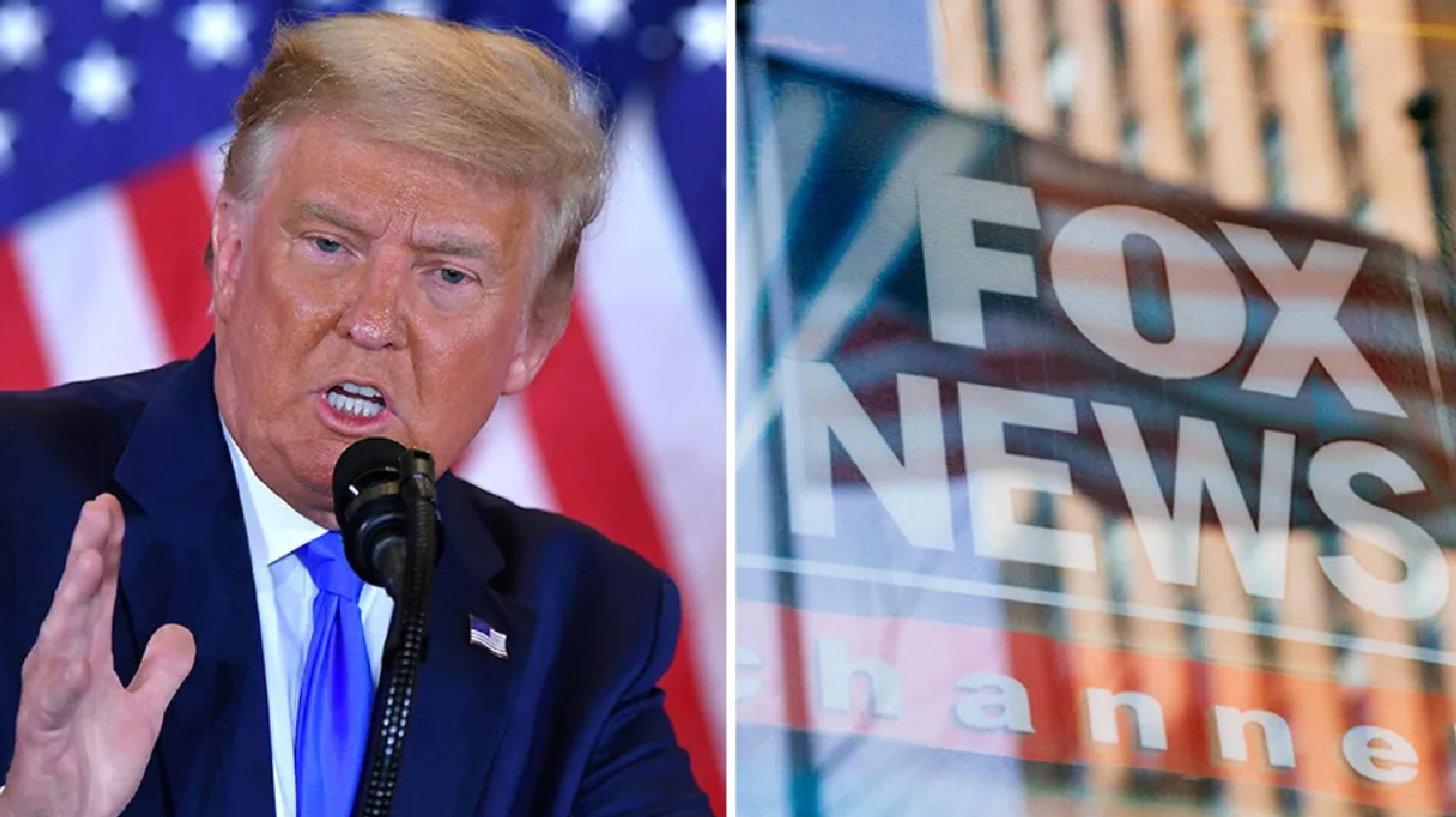
A growing divide within the conservative movement spilled into public view this weekend as Fox News host Mark Levin launched a blistering attack on President Donald Trump’s Iran strategy, accusing the administration of pressuring Israel while pursuing a diplomatic agreement designed to permanently prevent Iran from obtaining a nuclear weapon.
The dispute comes as the Trump administration continues negotiations with Tehran following a series of devastating military strikes that crippled Iran’s nuclear infrastructure, eliminated key regime leaders, and left the Islamic Republic in one of the weakest positions it has faced in decades.

President Trump and Vice President JD Vance have argued that the administration is negotiating from a position of overwhelming strength after demonstrating a willingness to use military force when necessary. Their goal, they say, is simple: ensure Iran never obtains a nuclear weapon while avoiding another endless war in the Middle East.
Levin, however, remains deeply skeptical.
During a fiery monologue that lasted more than 17 minutes on Saturday, the longtime conservative commentator accused members of the administration of unfairly targeting Israel while becoming too optimistic about Iran’s intentions.

“I want to say to people in and out of the administration: stop trashing, smearing, bullying the little state of Israel. Stop cozying up to and telling us that the enemy regime in Iran is now more rational, more moderate, and a regime that we can deal with,” Levin demanded. “When just a few months ago they slaughtered 50,000 people, they’re still hanging young people today and, if they had a nuclear missile today, they’d fire it into our country as sure as I’m alive.”
Levin also rejected any suggestion that Israel should allow outside governments to dictate its security decisions.
“I don’t know what’s going on, but if people think they can bully a little country, Israel — a people that have existed 4,000 years through the Babylonians and the Persians, through the Romans and the Third Reich — into surrendering their defense and their decision on how to secure their country, they get another thing coming,” Levin continued. “I think it’s outrageous.”
The criticism did not stop there.
Levin also used social media to question several administration policies, including reports surrounding a Boeing 747 gifted by Qatar and modified for use supporting presidential airlift operations.
“If it’s legal and other countries do it so be it. Do you think wealthy countries should be able to lavish gifts on our government?” Levin wrote.
His sharpest criticism, however, focused on the administration’s efforts to secure a broader peace agreement with Iran and its proxies.
“Item #1 in the MOU provides there’s an immediate and permanent end to the war and that includes Hezbollah in Lebanon. Iran is Hezbollah,” Levin posted. “What’s the enforcement mechanism? Nothing. Israel defends itself after constant attacks from Hezbollah and is admonished for it. Its interests are not aligned with ours, we’re told. It’s endangering the peace deal. This is beyond nuts.”
In another post, Levin argued that current ceasefire efforts were coming at Israel’s expense.
“Apparently as long as Israeli soldiers are killed the ceasefire is holding,” Levin claimed.
The administration has strongly rejected suggestions that it is abandoning Israel or weakening its support for America’s closest ally in the Middle East.
President Trump responded directly Sunday with a warning aimed squarely at Iran and its regional proxies.
“Iran must immediately stop their highly paid PROXIES in Lebanon from causing trouble. If they don’t, we’ll hit Iran very hard again, just like we did last week, only harder!!!” Trump posted on Truth Social.
For supporters of the administration, that message demonstrates exactly why they remain confident in Trump’s approach. They argue that no modern president has shown a greater willingness to confront Iran militarily while simultaneously seeking a diplomatic resolution that serves American interests.
Vice President JD Vance and Secretary of State Marco Rubio have both emphasized that any final agreement would require Iran to permanently abandon its nuclear ambitions, submit to extensive inspections, and comply with strict verification requirements before receiving any economic benefits.
Administration officials also note that no sanctions have been lifted, no frozen assets have been released, and no direct payments have been authorized.
Instead, they argue that Trump has successfully put Iran in a position where the regime must choose between compliance and continued isolation.
The disagreement highlights a broader debate that has been developing inside the Republican Party for years.
Traditional foreign-policy hawks often favor maintaining maximum military pressure and remain deeply skeptical of negotiations with hostile regimes.
Trump’s America First coalition generally supports overwhelming military strength but prefers leveraging that strength into favorable deals that avoid long-term military entanglements.
Supporters of the president argue that Trump’s strategy reflects the same formula that has defined much of his foreign policy: peace through strength.
Strike hard when necessary. Demonstrate unquestionable resolve. Negotiate from a position of power. And avoid the costly nation-building efforts and endless conflicts that frustrated many Americans for decades.
As negotiations continue, the debate between Levin and the Trump administration reflects a larger question facing conservatives: how best to secure American interests abroad while staying true to the America First principles that have reshaped the Republican Party.
For now, President Trump appears committed to proving that military strength and diplomacy are not opposing strategies—but complementary tools for achieving lasting peace and protecting America’s national security.
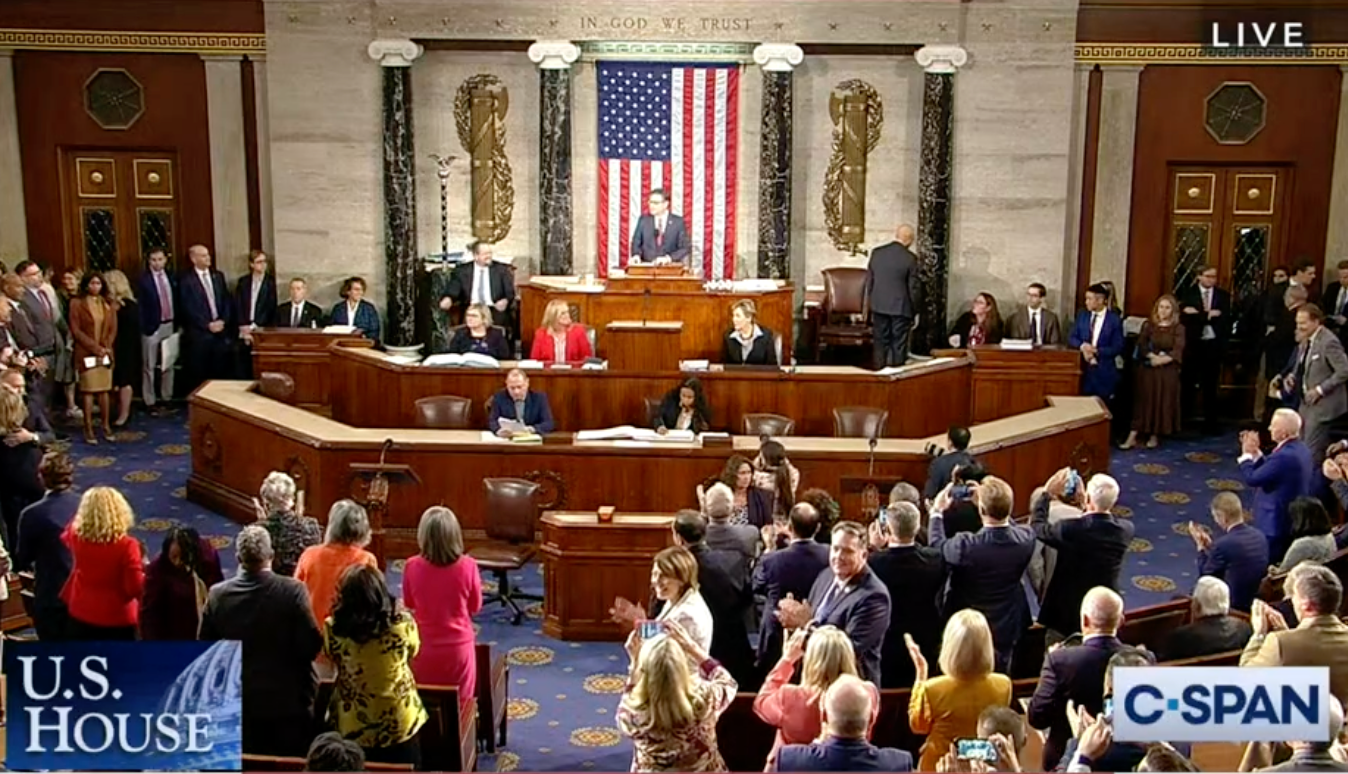
In a rare display of bipartisan cooperation, the U.S. House of Representatives overwhelmingly passed the amended 21st Century ROAD to Housing Act this week, advancing a package of reforms designed to tackle America’s housing affordability crisis while delivering on several key priorities championed by President Donald Trump.
The legislation passed by a decisive 396-13 vote, reflecting broad agreement that soaring housing costs, rising rents, and limited inventory have pushed homeownership out of reach for millions of Americans.
Supporters say the bill addresses one of the country’s most pressing economic challenges by cutting red tape, increasing housing supply, strengthening lending opportunities, and helping ensure that American families—not large corporations—have a fair shot at buying homes.
The legislation combines elements of previous House and Senate proposals and seeks to address housing shortages that have contributed to record-high home prices in many parts of the country.
House Financial Services Committee Chairman French Hill praised the measure as a practical, results-oriented solution focused on expanding opportunities for working Americans.
“This bill prioritizes American families by expanding homeownership, enhancing affordability, reducing burdensome regulations that drive up costs, and increasing housing supply nationwide,” Chairman Hill stated.
“Importantly, it delivers on President Trump’s call to limit institutional investors from competing with the American people as they seek to purchase a home,” Hill added.
The legislation includes a variety of reforms aimed at accelerating housing construction and reducing barriers that have slowed development for years.

Among its key provisions, the bill streamlines federal permitting requirements, reduces lengthy environmental review processes for certain redevelopment and infill housing projects, and encourages innovative housing solutions such as modular and manufactured homes.
The measure also provides grants to local governments willing to modernize zoning laws and remove restrictions that limit new construction.
Supporters argue that restrictive zoning policies, excessive permitting delays, and government bureaucracy have significantly contributed to America’s housing shortage.
Rather than relying on massive new federal spending programs, the legislation focuses on empowering local communities, encouraging private-sector investment, and removing obstacles that make housing more expensive.
The bill also raises loan limits for multifamily housing developments, creating incentives for apartment construction and expanding options for renters and first-time buyers alike.
Additional provisions strengthen rural housing initiatives, expand support for veterans seeking housing, modernize financing for smaller mortgage loans, and increase the role community banks can play in local lending markets.
Community banks have long argued that excessive regulations have made it more difficult for them to serve homebuyers and construction projects in their local communities.
Democratic Rep. Maxine Waters acknowledged the seriousness of the housing crisis despite broader political disagreements.
“America is in the middle of a full-blown affordable housing and homelessness crisis, and working families are burdened by skyrocketing rents and a housing market that is pushing homeownership further out of reach,” Waters said.
One of the most notable aspects of the legislation is its effort to curb the growing influence of large institutional investors in the housing market.
For years, investment firms and corporate landlords have purchased thousands of single-family homes, often outbidding families and first-time homebuyers. Critics argue that this trend has driven up prices while transforming communities into rental markets dominated by large corporations.
The legislation includes targeted restrictions designed to discourage large institutional investors from acquiring additional single-family homes.
That approach aligns closely with President Trump’s housing agenda.
Throughout his second administration, Trump has repeatedly argued that homeownership should remain a cornerstone of the American Dream and that government policies should prioritize families over Wall Street investors.
In his National Homeownership Month proclamation earlier this month, Trump emphasized the importance of restoring affordability and expanding opportunities for future homeowners.
“During National Homeownership Month, my Administration recommits to making housing more affordable so that young Americans and hardworking families can raise children, build memories, and create a future in a home of their own,” Trump said.
The president has frequently blamed the housing crisis on “reckless spending, burdensome regulations, and failed housing policies” implemented under previous administrations, as well as “mass illegal immigration and large institutional investors” that have increased pressure on housing supply.
Trump has also taken executive actions aimed at reducing institutional ownership of single-family homes, lowering mortgage costs, and strengthening federal housing programs.
“Under my leadership, America will be a Nation where homes belong to families — not corporations,” Trump said.
At the same time, Trump has emphasized the importance of protecting the value of homes already owned by millions of Americans.
“I don’t want to drive housing prices down. I want to drive housing prices up for people that own their homes. Existing housing, people who own their homes, we’re going to keep them wealthy. We’re going to keep those prices up. We’re not going to destroy the value of their homes so that somebody that didn’t work very hard can buy a home,” Trump said during a Cabinet meeting earlier this year.
He has also repeatedly summarized his housing philosophy with a simple message:
“Homes are built for people, not for corporations, and America will not become a nation of renters.”
With overwhelming bipartisan support in the House and growing concern over affordability nationwide, supporters hope the legislation will mark a significant step toward restoring homeownership opportunities and ensuring that the American Dream remains within reach for future generations.

Tucker Carlson Officially Makes Shock Announcement — He’s Out

Top Fox News Host Suffers Deranged Meltdown On LIVE TV — Doesn’t End Well…

It’s Over! The House Votes 396-13 — Trump Just Won!

Disturbing Discovery Obama Hid In New Presidential Library Just Found

DOJ Drops Hammer On MLB — Pride Night Backfires BIG Time

Biden Humiliates Himself On Stage — Video Captures Everything
-
 Economy4 months ago
Vance Leaves Meeting, Looks Straight Into Camera, Announces Stunning Arrest
-
 Economy4 months ago
Adam Schiff Facing 30 Years In Prison After Bank Records Leak
-
 Economy4 months ago
Supreme Curt Sides With Trump — He Can Remove The All
-
 Economy4 months ago
All Hell Breaks Loose On Fox When Jesse Watters Asks Fetterman One Question
-
 Economy2 months ago
Prayers Pour In After Fox Host Dies: ‘Senseless Murder’
-
 Economy4 months ago
NBC Stops LIVE Broadcast — Breaks Big Trump News
-
 Economy4 months ago
Trump Pulls Off Miracle Of A Lifetime — It’s Permanently Open
-

 Economy4 months ago
Swalwell Facing Jail Time After Sickening New Video Leaks