
Latest
BISHOP ROBERT BARRON: Pope Leo sees the AI age clearly — and warns we must save our souls

Pope Paul VI’s 1968 encyclical Humanae vitae covers a variety of themes, both theological and anthropological, and has proved to be remarkably prophetic, and yet it is still, in the minds of most people, simply the “birth control” encyclical. Similarly, Pope Francis’s 2015 encyclical Laudato Si’ ranges across a number of topics and provides a trenchant analysis of the philosophy that dominates the modern world, and yet, for most, it is simply the “global warming” encyclical. I am a bit afraid that something similar might happen to Pope Leo XIV’s Magnifica Humanitas, for it is already being characterized as the “AI encyclical.” But to reduce this extraordinary text to that single theme would be regrettable indeed. Leo does, of course, discuss AI, and with remarkable insight, but there is so much more going on in this letter, and it should not be overlooked.
The best framework for understanding the text is the title. Pope Paul VI famously said that the Church is an expert in humanity, and the Vatican II document Gaudium et spes commences with the reminder that the Church is concerned with all dimensions of human experience. One of the last texts composed by Pope Francis, Dignitas infinita, focused on the “infinite dignity” of the human being. The irreducible nobility of the human being is, I believe, the master motif of Magnifica Humanitas. In line with his recent predecessors, Pope Leo insists that we human beings are magnificent because we have been made in the image and likeness of God and even more wonderfully elevated through the Incarnation to a share in divinity itself. It is not the secular humanism that the pope presents, but a deeply theological and Christological humanism.
Magnifica Humanitas effectively commences with a contrast between two images drawn from the Old Testament, namely, the construction of the Tower of Babel and the rebuilding of the walls of Jerusalem after the return of the exiles from Babylon. The first, driven by imperialistic hubris and undertaken without reference to God, led to calamity; the second, supervised by Nehemiah, predicated upon the cooperation of the various elements within Israelite society and undertaken for the glory of God, led to something beautiful. Pope Leo worries that many of the “new things” of today, including and especially AI and other forms of advanced technology, can have a Tower of Babel quality, that is to say, a tendency toward manipulation, domination, and the reduction of all forms of communication to a singular digital language. But he firmly believes that, rightly employed, these marvels can fit into a more “Nehemiah” framework and become a means of enhancing human dignity and community.
But before he treats these matters in detail, he pauses to consider the great principles that undergird Catholic social teaching. He wants to show that a proper consideration of contemporary technology must take place within a fundamentally moral context. And so, in the second chapter of Magnifica Humanitas, Leo provides an extremely concise and helpful overview of the Church’s social doctrine, emphasizing its satisfying ideological equilibrium. Thus, subsidiarity (the preference for more local forms of authority), typically favored by conservatives, is placed in healthy tension with solidarity (our moral obligation to one another), typically favored by liberals. And the dignity of the individual, typically stressed by conservatives, is balanced by an insistence upon the common good, typically stressed by liberals. The moral legitimacy of private property and the free market, dear to more right-leaning people, is placed alongside the universal destination of goods, a theme of importance to people of the left, and so on. This creative tension is the genius of Catholic social teaching and is precisely what allows its representatives to enter into constructive conversation with those on various points of the political spectrum.
POPE LEO XIV CALLS THIS A CHALLENGE TO ‘HUMAN DIGNITY’ IN FIRST ADDRESS TO CARDINALS
In chapters three and four, Pope Leo turns with acute attention to the particular issues presented by the revolution in communication technology underway today. His entire discussion is conditioned by a theme borrowed from Pope Francis, namely, the danger of a “technocratic paradigm.” By this term, both Francis and Leo mean the tendency to privilege efficiency, control, and practical results over the dignity of the individual and the development of real communion. Leo, in fact, references Romano Guardini, a favorite of Pope Francis, who, at the beginning of the 20th century, bemoaned the dehumanizing features of a technologically driven culture. AI and its attendant technologies are good to the extent that they function as tools in the hands of responsible agents acting for a moral purpose; they are problematic to the extent that they come to dominate both thought and action, bending the properly human in the direction of the machine.
Within the confines of this brief article, I cannot begin to cover the complexity of the pope’s analysis of AI, but I might draw attention to a few highlights.
First, Leo, as befits an Augustinian, is deeply concerned with the truth, and he fears that the digital space is inhabited by people who are far more interested in power than in truth. The denizens of the AI world can propagate, for a variety of reasons, “fake news,” deeply distorted narratives, and misleading information. But the Tower of Babel story shows that when will is divorced from reality, disaster follows: “Such power should be constantly guided by the pursuit of truth and respect for human dignity, so that the culture fostered on the internet does not become an instrument of excessive distraction, homogenization or dominance, but rather a setting in which inner freedom and critical thought can mature” (136).
A related concern is how AI can undermine the sort of slow, patient, and careful work required to uncover the deepest truth. The ease with which AI delivers data to us can deceive us into thinking that acquiring “information” is the same as coming to understand. Here is the pope’s pithy conclusion: “Many educators already report signs of dehumanization, where people may ‘know many things’ but struggle to find direction in their lives, partly due to an inability to connect information with deeper knowledge or maintain a sense of purpose” (146).
Leo is also deeply distressed by the negative psychological impact of the internet on those who are drawn into the digital space. Many studies have demonstrated a tight correlation between “screen time” and depression, anxiety, and low self-esteem. Moreover, the internet has proved to be a breeding ground for sexual exploitation, grooming, and blackmail, not to mention an environment in which the worst forms of pornography have become available to children. Accordingly, the pope calls for effective regulation of this potentially dangerous media space.
THE AI REVOLUTION THREATENS OFFICE JOBS, BUT REVIVES DEMAND FOR SKILLED TRADES
Another preoccupation of the pope is the way AI has begun to affect the arena of work. Following St. John Paul II, Leo maintains that labor is not merely a practical necessity, but rather an essential dimension of human flourishing. Through our toil, we engage our minds, wills, and bodies, and we actualize potentialities within ourselves that we did not realize we had. And therefore, when the speed and efficiency of AI effectively eliminate possibly millions of jobs, certain economic advantages might accrue to the powerful, but a moral and spiritual disaster would occur for the working class: “The pursuit of greater profits cannot justify choices that systematically sacrifice jobs, because the human person is an end, not a means, and the economic order must remain subordinate to human dignity and the common good” (152).
CLICK HERE FOR MORE FOX NEWS OPINION
I will draw attention, finally, to Leo’s deep anxiety regarding the addictive quality of social media. It has now been well established that the devices that give us access to the web were consciously designed to be addictive — and this is perhaps most evident in the “doomscrolling” practiced by so many today.
Further, since AI tools capture so much personal data and information, all of us are deeply vulnerable to manipulation on the part of those who have less-than-savory economic and political motivations. Here are Pope Leo’s words: “When every action — movements, purchases, relationships and preferences — leaves a trace, a new form of power emerges, namely the power to profile, predict and influence behavior, often without individuals being fully aware of it” (171). Again, there is extraordinary richness in this fourth chapter of Magnifica Humanitas, and I would strongly encourage individuals and parish groups to engage in a serious reading of it.
The final chapter of Magnifica Humanitas finds the pope shifting to a somewhat different key, as he focuses on questions of war and peace. This might prove to be the most talked-about and controversial section of the encyclical, given the roiled circumstances of the political world today.
In fact, I found this part of the letter the most thoroughly Augustinian. Basic to St. Augustine’s vision, especially as he articulated it in his City of God, is the contrast between the Roman society of his day, predicated upon the worship of morally ambiguous gods and goddesses, and the properly Christian society, predicated upon worship of the God whose name is love. In accord with the principle that we become what we worship, Rome was bellicose, violent, marked by what Augustine called the libido dominandi (the lust to dominate). And following the same principle, Christian society at least ought to be characterized by forgiveness, peace, and reconciliation. History, on Augustine’s reading, is an ongoing struggle between these two visions.
Pope Leo is anguished because he sees the ways of war coming to dominate the polity of the world today. And he calls upon the Church to provide an alternative vision, a civilization of love. This City of God will not emerge, he says, from some grand plan imposed from above, but rather from the steady work of individuals producing, in time, a cumulative effect. Remarkably, Leo quotes the great J.R.R. Tolkien in this context: “It is not our part to master all the tides of the world, but to do what is in us for the succour of those years wherein we are set, uprooting the evil in the fields that we know, so that those who live after may have clean earth to till” (213, Gandalf in “The Return of the King.”). Especially in our time, when AI and other forms of advanced technology have made warfare more likely and more “efficient,” Pope Leo wants the Church to present to the world the path of peace.
I might remark on a certain irony in this context. In regard to questions of war and peace, St. Augustine is best known, not for his proposal of a civilization of love, but for his theory of just war. But we have to be eminently clear regarding the function of this device. One must never construe Augustine’s theory as some facile “justification” for war, a means of providing moral cover for the wanton use of violence. In fact, just the contrary is the case. The great saint saw his criteria as providing a severe limit to the waging of war, and the Church has always treated them as such. There is one line from this section of the letter that puzzled me a bit. Leo says that he feels the just war theory is “outdated.” I certainly understand that since the means of waging war have changed so dramatically from Augustine’s time, a hasty application of the just war protocols would be naïve today. But I do not think that the criteria themselves — declaration by a just authority, proportionality, discrimination between combatants and noncombatants, last resort, and so on — are outdated. Instead, I believe they should be applied with particular rigor in our present circumstance.
In conclusion, please read this letter and do so with care and in a meditative frame of mind. Consciously step away from the online world of shouted opinions, arrogant self-assertion, and verbal violence. And take in the work of this wise man, an expert in humanity.
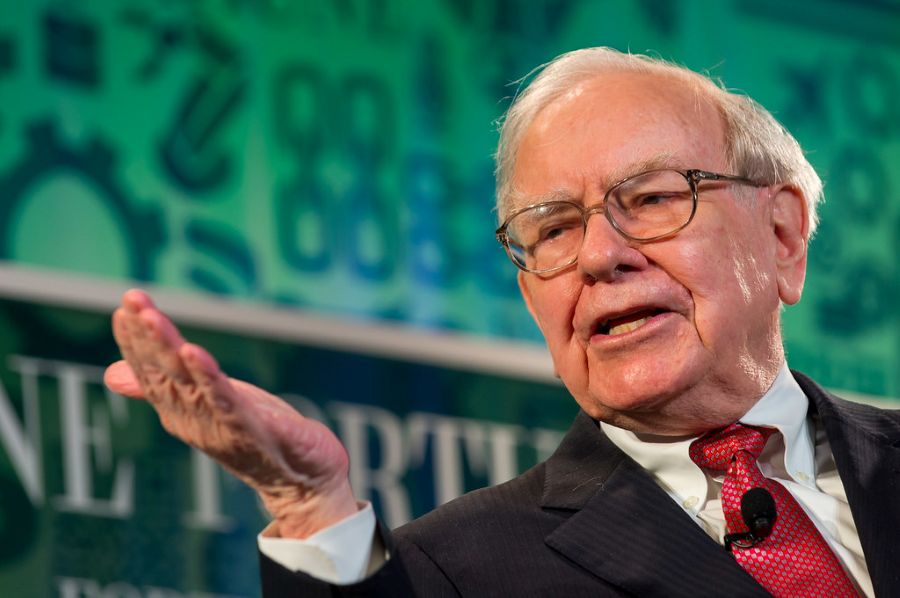
An extraordinary era in American business is coming to an end.
Warren Buffett is officially stepping away from the chairman’s seat at Berkshire Hathaway, closing another chapter in a remarkable run that stretched for more than half a century and turned the legendary investor into one of the most influential figures in modern business.
Berkshire announced Friday that Buffett, 96, will become chairman emeritus effective immediately. He isn’t cutting ties with the company entirely, however, and will remain on Berkshire’s board of directors.
Taking his place as chairman will be his son, Howard Buffett.
Howard has served as a Berkshire director since 1993 and has spent decades leading the Howard G. Buffett Foundation. His elevation to chairman represents another major piece of a succession plan Berkshire has been preparing for years.
For Warren Buffett, the announcement marks the latest — and one of the most significant — steps away from the company he spent decades building into a corporate powerhouse.
Buffett had served as Berkshire Hathaway’s chairman since 1970.
During that time, he oversaw an extraordinary transformation, taking what had once been a struggling textile business and building it into a massive conglomerate with operations spanning insurance, railroads, energy, manufacturing, retail and services.
His influence over the company’s day-to-day operations had already begun to diminish.
Buffett stepped down as Berkshire’s chief executive late last year, turning control of the company over to longtime lieutenant Greg Abel.
Now the chairman’s title is changing hands as well.
Friday’s announcement means Berkshire is entering a new era in which Abel runs the company’s operations while Howard Buffett oversees the board.
Warren Buffett, however, isn’t disappearing.
As chairman emeritus, he will remain a director and continue providing his judgment and perspective to the company’s leadership — preserving a connection between Berkshire’s future and the man who shaped its identity for generations.
Following the announcement, Abel paid tribute to the enormous impact Buffett has had on the company.
“Warren’s impact on Berkshire and its owners is without parallel in the history of American business,” Abel said in a statement. “The culture Warren built and the values he championed will remain at the heart of Berkshire, and Howard will be their guardian.”
That culture became almost as famous as Buffett himself.
Rather than chasing every new market trend, Buffett built his reputation around patience, long-term investing, disciplined acquisitions and a straightforward approach to evaluating businesses.
Under his leadership, Berkshire accumulated an enormous portfolio of operating companies while also becoming famous for taking major stock positions in some of America’s most recognizable corporations.
Along the way, Buffett became more than a corporate executive.
His annual shareholder letters, public appearances and Berkshire shareholder meetings turned the Omaha investor into one of the world’s most closely followed voices on investing, business and the American economy.
But the transition away from Buffett has been unfolding for some time.
Last year, Buffett announced that Abel would become Berkshire’s top executive. He later signaled that his own public presence would shrink, including fewer appearances at Berkshire’s annual meeting and an end to writing the company’s annual shareholder letter.
Howard Buffett’s move into the chairman’s position wasn’t unexpected either.
The younger Buffett had long been identified as an important part of Berkshire’s eventual succession structure, with his father previously describing the chairman’s role as a safeguard for the company’s distinctive culture and values once he was no longer overseeing daily operations.
That succession plan is now becoming reality.
Greg Abel is running Berkshire as CEO.
Howard Buffett is taking control of the board as chairman.
And Warren Buffett — after more than five decades at the center of one of the most remarkable corporate transformations in American history — is moving into an advisory role as chairman emeritus.
The legendary investor may still have a seat at the table.
But the company he built is officially moving into its post-Buffett leadership era.
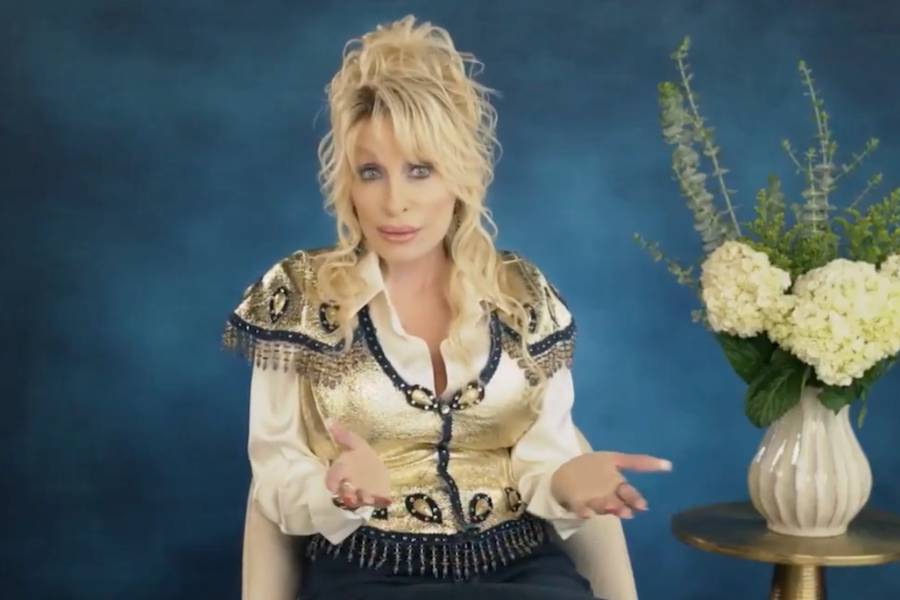
Dolly Parton had one final message for the music world — and it was delivered after her death.
The country music legend appeared on screen Wednesday night during the 2026 Americana Honors & Awards, where she was posthumously honored with the Americana Lifetime Achievement Award.
Parton died Aug. 25 at the age of 80 following what was described as a “brief battle with cancer.”
But before her death, Parton had recorded a video accepting the prestigious honor. When it played before the audience Wednesday night, fans were given one more chance to hear from the woman whose unmistakable voice, personality and songwriting helped define generations of American music.
And in classic Dolly fashion, she opened simply.
“Well, hey, it’s Dolly. I’m honored to be receiving a Lifetime Achievement Award from the Americana Music Association.”
Parton then looked back at where it all began — in Tennessee’s Smoky Mountains, surrounded by the roots music that would eventually help propel her from humble beginnings to worldwide fame.
“I mean, roots music, or what is now called Americana music, is what I grew up playing back in the Smoky Mountains,” Parton continued. “It’s that same music that drew me back to East Tennessee in 1997 to write and record my album, Hungry Again. And that project really opened the door to a series of bluegrass and acoustic albums that changed the course of my career in so many ways.”
Those projects brought Parton back to the acoustic sounds of her childhood while introducing her music to another generation of listeners.
Looking back, Parton recognized just how important that chapter had become.
“Now, new fans discovered these albums, new Americana music communities embraced them, and now looking back at it all, I see this era of my career as a musical renaissance of sorts,” Parton said. “I want to thank everyone at the AMA for recognizing me with this award. It’s a great honor truly, and just know that I will always love you.”
Those final words carried unmistakable weight.
“I will always love you” wasn’t merely a farewell. It was also a poignant reference to one of the most famous songs Parton ever wrote — turning the closing moments of her prerecorded acceptance into an especially emotional goodbye.
The tribute didn’t end there.
Dolly Parton posthumously accepts award in pre-recorded Lifetime Achievement speech 🤍 pic.twitter.com/dRzCHuzc0Q
— TMZ (@TMZ) September 17, 2026
Longtime friend and fellow country music icon Emmylou Harris took the stage to remember Parton’s extraordinary journey from a young Tennessee singer with enormous ambitions to one of the most recognizable entertainers in the world.
Harris recalled the pivotal moment in 1967 when Parton joined Porter Wagoner’s television program, an opportunity that helped introduce her to a national audience.
But Harris made clear that Parton was never destined to remain in someone else’s shadow.
“In 1967, Dolly got a good start on her big dream when she landed a gig as the girl singer with Porter Wagoner. Their duets were a hit on the show and on the charts, but Dolly was nobody’s sidekick. She wanted more and she deserved more, and she set out to get it always, always on her own terms,” Harris, 79, said. “And we all know what happened when Dolly set her sights on something.”
What happened was a career that exploded far beyond the boundaries of country music.
Parton became a crossover pop success, a movie star and an internationally recognized entertainer while maintaining the East Tennessee identity that remained central to her public image and music.
Her songwriting alone established an enormous legacy. But Harris reminded the audience that Parton’s talents went far beyond the songs she wrote.
“She was one of our all-time greatest songwriters, but she shined just as brightly on stage,” Harris shared. “She lit up the TV screen and then she, she lit up the movie screen.”
Then there was the personality.
Parton’s ability to move an audience with a song and, moments later, make that same audience laugh became one of the trademarks of her decades in the spotlight.
“Her stunningly beautiful, pure mountain voice could make us cry and then crack us up with a well-aimed, sometimes body joke,” Harris said. “There was nothing Dolly couldn’t do, and so she did it.”
The evening’s tribute ultimately returned to the music.
Brandi Carlile and I’m with Her performed Parton’s “Coat of Many Colors,” one of the songs most closely associated with her upbringing and remarkable journey from the Smoky Mountains to international superstardom.
Parton was honored alongside other recipients at Wednesday’s ceremony, including Led Zeppelin frontman Robert Plant.
But it was Parton’s own prerecorded words that provided one of the night’s most poignant moments.
A final appearance. A final thank-you.
And an ending that could hardly have been more fitting:
“Just know that I will always love you.”
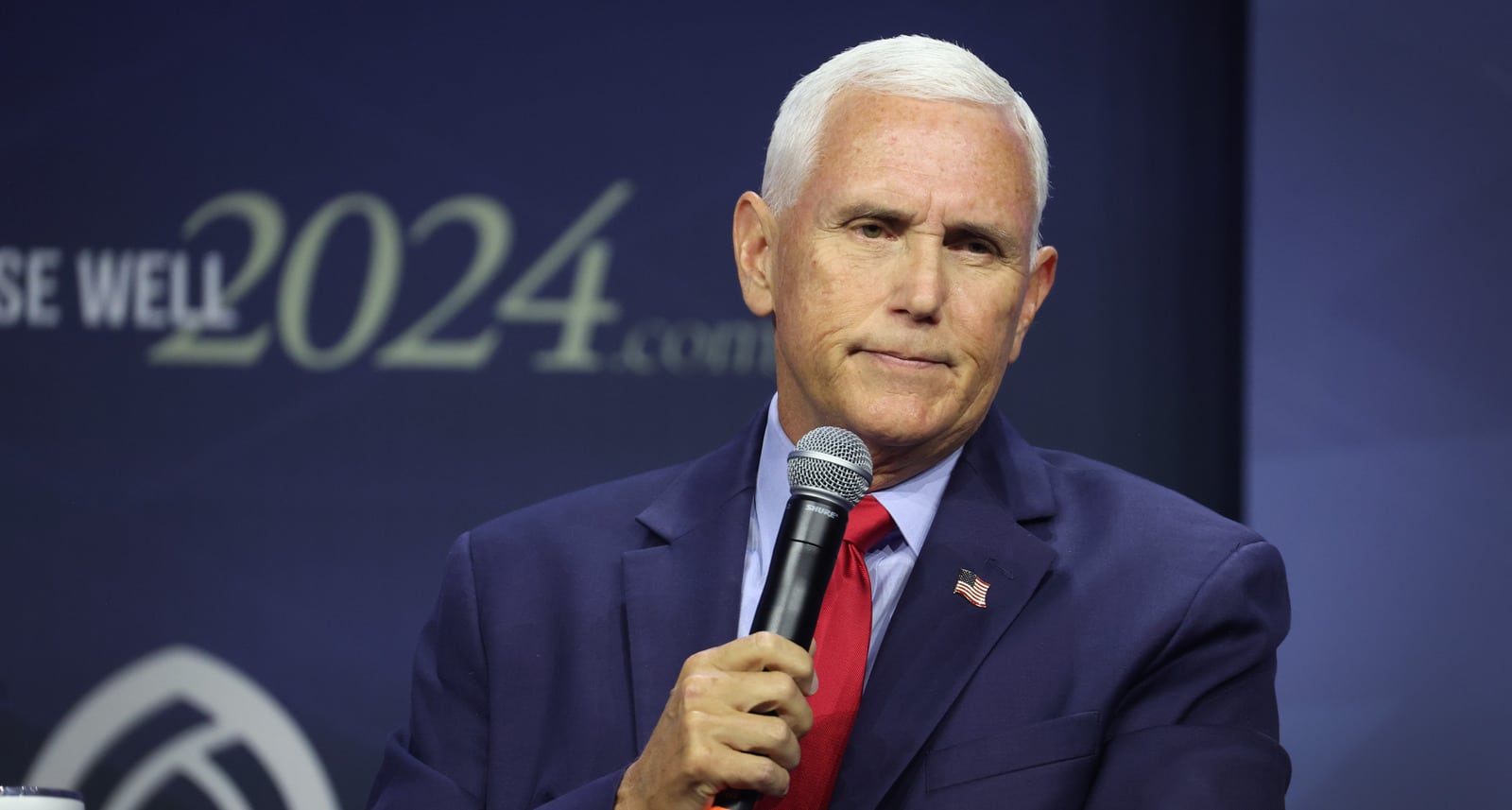
Former Vice President Mike Pence is making his plans for 2028 clear — and another run for the White House apparently isn’t part of them.
After years of political upheaval, a failed 2024 presidential campaign and a dramatic break with President Donald Trump, Pence said this week that he currently has no plans to seek the presidency — or any other elected office — in 2028.
The former vice president addressed his political future during an appearance at the Economic Club of Washington, D.C., where chairman David Rubenstein pressed him about whether voters could see his name on another presidential ballot.
“What I can tell you is that we have no plans,” Pence replied.
Rather than gearing up for another campaign, Pence said his attention is centered on his family and Advancing American Freedom, the conservative policy organization he founded after leaving the White House.
Pence said he intends to use his public platform to continue advocating for the conservative principles that have defined much of his career, including lower taxes, limited government, reduced regulation, traditional values and opposition to abortion.
“The calling of my life right now is to be a champion for these principles,” Pence said.
The comments put considerable distance between Pence and the emerging 2028 presidential contest, even as Republicans begin looking ahead to the next battle for the White House.
Pence has been down that road before.
In 2023, he launched a Republican presidential campaign that put him directly against Trump, his former running mate and the president he served alongside for four years. But Pence struggled to gain traction and suspended his campaign in October 2023, months before Republican voters began casting primary ballots.
He later declined to endorse Trump in the 2024 election.
Trump ultimately secured the Republican nomination and returned to the White House.
But the political split between the two men goes back much further.
Pence served as Trump’s vice president from 2017 until 2021 after previously serving as Indiana governor and a member of Congress. Their once-close political alliance fractured following the 2020 presidential election and the events surrounding Jan. 6, 2021.
Trump urged Pence, who was presiding over the congressional certification of the Electoral College vote, to reject or delay certification of Joe Biden’s victory.
Pence refused, concluding that the Constitution gave him no authority to do so.
Years later, he remains unapologetic about that decision.
“It was the easiest decision I’ve ever made,” Pence said. “By God’s grace I did my duty that day.”
Since leaving office, Pence has remained active in Republican politics, but increasingly as a voice arguing for a more traditional strain of conservatism as parts of the GOP have embraced populist policies.
Through Advancing American Freedom and his public appearances, Pence has continued promoting free markets, limited government, a strong American role overseas and socially conservative policies.
Earlier this year, he argued that Republicans should determine what principles they want their party to stand for before becoming consumed with the question of who should carry the GOP banner in 2028.
Now Pence appears to be taking himself out of that conversation — at least for the time being.
Notably, he stopped short of declaring that he would never seek public office again. His wording was narrower: He has “no plans” to run in 2028.
For the foreseeable future, however, Pence says his focus is on advancing his political philosophy rather than launching another campaign.
And his willingness to publicly challenge Trump hasn’t disappeared.
Earlier this year, Pence broke with the president over the possibility that people involved in the Jan. 6 Capitol riot could receive taxpayer-funded compensation.
Speaking with Axios while discussing his book *What Conservatives Believe*, Pence described Jan. 6 as a “tragic day” and drew a firm line when it came to people who committed violence against law enforcement.
“I didn’t agree with the President when he pardoned people who engaged in violence against law enforcement officials,” Pence said.
Then he went further.
“And it would be my hope that anyone who engaged in violence against law enforcement or at the Capitol building would never be rewarded with taxpayers’ money.”
The comments underscored a political divide that has persisted years after Pence left the vice presidency.
For now, Pence appears prepared to remain part of the conservative debate — just not as a candidate in 2028.

Warren Buffett Makes Shocking Announcement

Dolly Parton Delivers Stunning Video Message Weeks After Her Death

Get Ready — Mike Pence Makes Stunning 2028 Announcement

Trump Chief Of Staff Susie Wiles Shares Shocking Personal News

JD Vance Issues Stunning New Warning – Didn’t Expect This!

Removed From the Country — Ilhan Omar Hit With Horrid News

‘The Five’ Gets Emotional As Greg Gutfeld Announces Tragic News

‘EFFECTIVE IMMEDIATELY’ — Barack Obama Gets Devastating News

Everyday Americans Being Treated As Criminals — Including You, Right Now

Schumer Loses! Court Sides With Trump In Historic Move

HUGE: 9/11 Widow Goes Rogue, Makes Damning Call Out During Ground Zero Ceremony

JUST IN: SCOTUS Shocks GOP With Brutal Ruling
-
 Economy5 months ago
Vance Leaves Meeting, Looks Straight Into Camera, Announces Stunning Arrest
-
 Economy5 months ago
Adam Schiff Facing 30 Years In Prison After Bank Records Leak
-
 Economy5 months ago
Supreme Curt Sides With Trump — He Can Remove The All
-
 Culture3 months ago
Michelle Obama Drops Nasty Bomb About ‘Useless’ Daughter
-
 Economy5 months ago
All Hell Breaks Loose On Fox When Jesse Watters Asks Fetterman One Question
-
 Economy3 months ago
Prayers Pour In After Fox Host Dies: ‘Senseless Murder’
-

 Latest3 months ago
Fox News Stuns With Announcement About 5 Fired Hosts
-
 Economy5 months ago
NBC Stops LIVE Broadcast — Breaks Big Trump News