
Latest
DOJ expands indictment against SPLC, alleging $4M secretly funneled to KKK and extremist groups


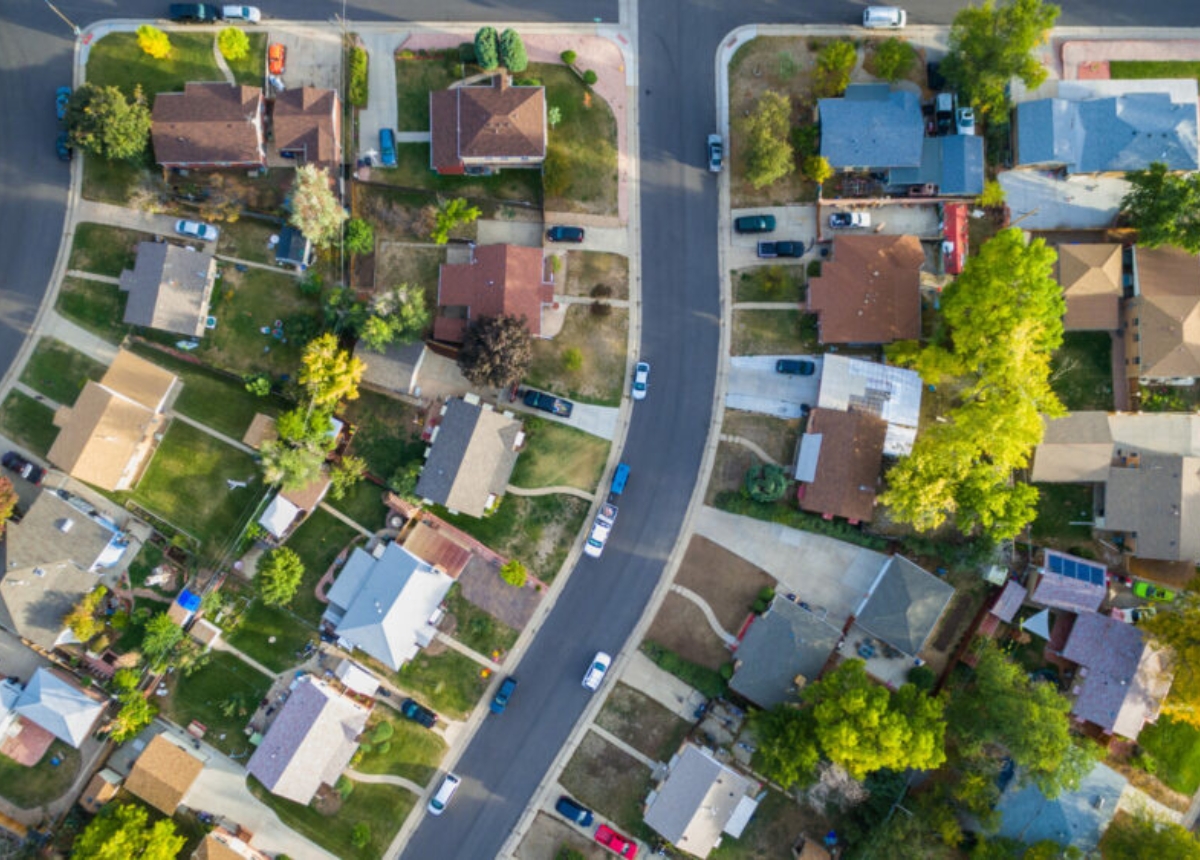
You’re driving to work. Picking up your kids. Going to the grocery store. Visiting a friend.
You haven’t committed a crime. You aren’t a suspect. You’re just going about your life.
But there may be a camera recording your vehicle — and creating a digital record of where you were, when you were there, and what your vehicle looked like.
And chances are, nobody asked for your permission.
Flock cameras are spreading across America. The debate isn’t simply about whether they can help catch criminals. The far more uncomfortable question is:
How much surveillance are Americans expected to accept before someone finally says enough?
You may have already driven past one without knowing it.
Small cameras mounted near neighborhood entrances, intersections, and major roads can look like ordinary security equipment. But automated license plate reader systems such as Flock Safety can capture passing vehicles, recording the license plate, vehicle characteristics, time, and location.
That means your movements can become part of a searchable database even if you have never committed a crime or been suspected of one.
And that should make every driver stop and think.
You Don’t Have to Be a Criminal
This is where the issue gets uncomfortable.
You don’t have to be under investigation.
You don’t have to be a suspect.
You don’t have to have done anything wrong.
You simply have to drive past a camera.
The system can capture your vehicle anyway.
According to unFlockIt, ALPR systems can create searchable records showing where vehicles have been seen and when. The organization argues that interconnected camera networks can allow information collected locally to become accessible beyond the community where it was originally captured. unFlockIt
Think about what that means.
A trip to the grocery store.
A visit to a doctor’s office.
A stop at a friend’s house.
A drive across town.
All of it could potentially leave another digital footprint.
And once that information exists, there is a question we should all be asking:
Who gets to look at it?
This Isn’t Just About Catching Criminals
To be fair, supporters of Flock cameras have a compelling argument.
Automated license plate readers can help police locate stolen vehicles, identify suspects, and respond to serious crimes.
Nobody wants criminals getting away with violent offenses or stolen vehicles disappearing without a trace.
But public safety and privacy don’t have to be mutually exclusive.
The real issue is what happens when a tool designed to help investigators identify suspects also captures information about everyone else.
That distinction matters.
Traditional police investigations generally begin with a reason to investigate someone.
Mass data collection works differently.
The database can exist first. The search can come later.
And that raises an uncomfortable question:
Should simply driving down a public road be enough to place your vehicle into a database that someone can potentially search later?
One Camera Is One Thing. A Network Is Something Else.
Maybe one camera doesn’t sound particularly alarming.
It sees your vehicle.
The moment passes.
You drive away.
But what happens when cameras aren’t operating independently?
What happens when they’re part of a much larger network?
unFlockIt describes a national network in which participating agencies can potentially share access to ALPR data beyond the community where it was originally collected. unFlockIt
Now the issue becomes much bigger than one camera at one intersection.
A single camera might capture one moment.
A connected network can potentially reveal patterns.
Where a vehicle has been seen.
When it was seen.
Which locations it passed.
And potentially how those sightings connect across different jurisdictions.
That is an extraordinary amount of information about ordinary Americans who may have done absolutely nothing wrong.
And once that infrastructure exists, who decides what it can eventually be used for?
What Happens When the Technology Gets Even Better?
Here’s another question worth asking.
Technology doesn’t usually get weaker.
It gets cheaper.
Faster.
More sophisticated.
More connected.
Today, we’re talking about license plates and vehicle characteristics.
But surveillance technology continues to evolve.
So the question isn’t just what these systems can do today.
It’s what they’ll be capable of doing five or ten years from now — and whether the rules protecting Americans will have kept up.
That is why waiting until the technology is everywhere could be a serious mistake.
The time to establish boundaries is before the infrastructure becomes impossible to roll back.
Communities Are Starting to Push Back
And this isn’t some fringe concern dreamed up by a handful of conspiracy theorists.
Communities are actually beginning to challenge these systems.
In August 2026, Kendall County, Texas commissioners unanimously voted not to renew a Flock Safety contract covering more than 50 cameras, following public concerns about privacy, transparency, and data protection. MySanAntonio reporting
And Kendall County isn’t alone.
Recent reporting has documented growing resistance to Flock cameras in places including Tampa Bay and Pittsburgh, where residents have questioned whether the public-safety benefits justify the potential privacy risks. Axios reporting
The debate is spreading because the technology is spreading.
So Who Made This Decision?
This may be the question that deserves the most attention.
Who authorized the cameras in your community?
Did residents vote on them?
Were people given meaningful notice?
Did most residents even know they were being installed?
And perhaps most importantly:
Do ordinary citizens have any meaningful say in what happens to the information being collected about them?
Those are not anti-police questions.
They’re not anti-technology questions.
They’re accountability questions.
Citizens should be asking:
- Who authorized these cameras?
- Were residents given meaningful notice?
- How long is the information retained?
- Who can search the database?
- Can outside agencies access local data?
- What safeguards prevent abuse?
- Are searches audited?
- What happens if the information is wrong?
- Can citizens see the policies governing the system?
- Can the community vote on whether these systems should remain?
If government is going to collect information about innocent people, the public deserves to know exactly what is being collected, who can access it, and what prevents that power from being abused.
Supporting Police Doesn’t Mean Supporting Unlimited Surveillance
There is an important distinction that often gets lost in this debate.
You can support police officers.
You can want dangerous criminals caught.
You can want stolen cars recovered.
And you can still believe government surveillance should have limits.
Those positions aren’t contradictory.
In fact, meaningful limits and transparency may be exactly what is needed to preserve public trust in the technology.
Because once people begin believing that they’re being watched everywhere they go, trust starts disappearing.
Don’t Wait Until It’s Everywhere
The worst time to start asking questions is after the cameras have become permanent fixtures throughout your community.
Whether you support Flock cameras or oppose them, you should know where they’re located and how the information they collect is being used.
That’s exactly why projects like unFlockIt are drawing attention to the issue. The organization has created a national map intended to help people identify ALPR cameras near them and is organizing support for its national petition. unFlockIt
✍️ Your Community. Your Data. Your Voice.
If you believe Americans deserve greater transparency and stronger limits on warrantless surveillance, sign the unFlockIt petition and make your voice heard.
SIGN THE UNFLOCKIT NATIONAL PETITION
You can also use unFlockIt’s map to see reported surveillance cameras in your area. View the unFlockIt map
Because ultimately, this isn’t about whether technology is good or bad.
It’s about power.
It’s about what happens when the ability to collect information about ordinary citizens becomes easier than ever.
And it’s about whether Americans get to establish the rules before that power becomes impossible to take back.
So ask yourself:
Should the government be able to record and search where ordinary Americans drive when those people have never been suspected of a crime?
Maybe your answer is yes.
Maybe it’s no.
But shouldn’t you have a say?
Because the cameras are already watching.
Cracker Barrel built its reputation on comfort food, Southern tradition, and a menu customers could count on for decades.
That’s exactly why loyal diners are still fuming as the restaurant chain continues removing many of the classic dishes that helped make it a household name.
For years, customers have pleaded with the Tennessee-based chain to restore fan favorites that quietly disappeared from the menu, including black-eyed peas, fried haddock, red-eye gravy, fried chicken livers, and perhaps the most mourned item of all—the Sunrise Sampler.
For many longtime patrons, the Sunrise Sampler wasn’t just another breakfast. It was the breakfast.
The hearty platter came loaded with eggs, grits, fried apples, hash brown casserole, sausage, bacon, country ham, and biscuits with gravy—giving diners a taste of nearly everything Cracker Barrel had to offer without having to piece together a meal item by item.
“I noticed a while back that Cracker Barrel removed the GOAT of all breakfasts, the Sunrise Sampler, from the menu,” Josh Cooper, owner of Cooper’s Next Level BBQ in Tallahassee, Florida, told Fox News Digital. “You used to get a little bit of everything without breaking the bank.”
The meal hasn’t completely disappeared—but recreating it now comes with a catch.
Customers must order every component separately, turning what was once an affordable breakfast favorite into a considerably more expensive order.
“Now, in order to get that same teaser touch from the Sunrise Sampler, you have to order it all à la carte, which costs around $25 for the same great meal,” he said. “Blasphemy!”
Fox News Digital reached out to Cracker Barrel for comment.
The growing frustration over disappearing menu items comes after the company already faced a wave of backlash for attempting to modernize its image.
Last year, Cracker Barrel sparked outrage among longtime customers after unveiling a redesigned logo and updated restaurant interiors that many believed stripped away the rustic charm that had long defined the brand.
The changes were part of a sweeping $700 million overhaul across more than 660 locations, including menu revisions and a cleaner, less cluttered dining room design.
The company ultimately reversed course following widespread criticism, but many loyal customers say the damage had already been done.
The leadership shakeup continued last week when Cracker Barrel announced that CEO Julie Masino will step down on Aug. 10.
Former Bloomin’ Brands CEO David Deno is slated to take over.
For many customers, however, the issue extends far beyond a logo or a fresh coat of paint.
They believe corporate leadership has steadily chipped away at the very traditions that made Cracker Barrel stand apart from countless other restaurant chains.
Cooper said companies often underestimate the emotional attachment customers have to longtime menu favorites.
People are “asking for comfort and nostalgia.”
“The reality is that nostalgia matters. And when you remove popular items without controlling the narrative or managing customers’ expectations, you are bound to have upset patrons,” he said.
“Whether it’s due to rising food costs, kitchen timing or any other reason, it’s important to communicate with the people who put you on the map in the first place. Communication matters.”
Rachel Love, a self-described Cracker Barrel enthusiast from Tennessee, said one discontinued favorite remains at the top of her wish list.
“I absolutely loved the black-eyed peas, and I’m so glad they’re getting some attention,” Love told Fox News Digital. “They were one of my favorite sides and always felt like such a classic part of the Cracker Barrel experience.”
Love also hopes the restaurant revives its baked apple dumpling, describing it as “the perfect comfort dessert” for a brand built on old-fashioned hospitality.
To her, the debate is about much more than a handful of discontinued recipes.
“People aren’t just asking for old menu items — they’re asking for the comfort and nostalgia that came with them,” she said.
“Sometimes bringing back one classic dish means more to loyal customers than introducing several new ones.”
That may be the lesson Cracker Barrel continues to learn the hard way.
Customers aren’t asking the chain to reinvent itself.
They’re asking it to remember what made it successful.
They want the front porch.
They want the country store.
They want the breakfasts, the classic sides, and the timeless comfort food that turned Cracker Barrel into an American institution.
For many loyal diners, nostalgia isn’t a weakness.
It’s the brand.
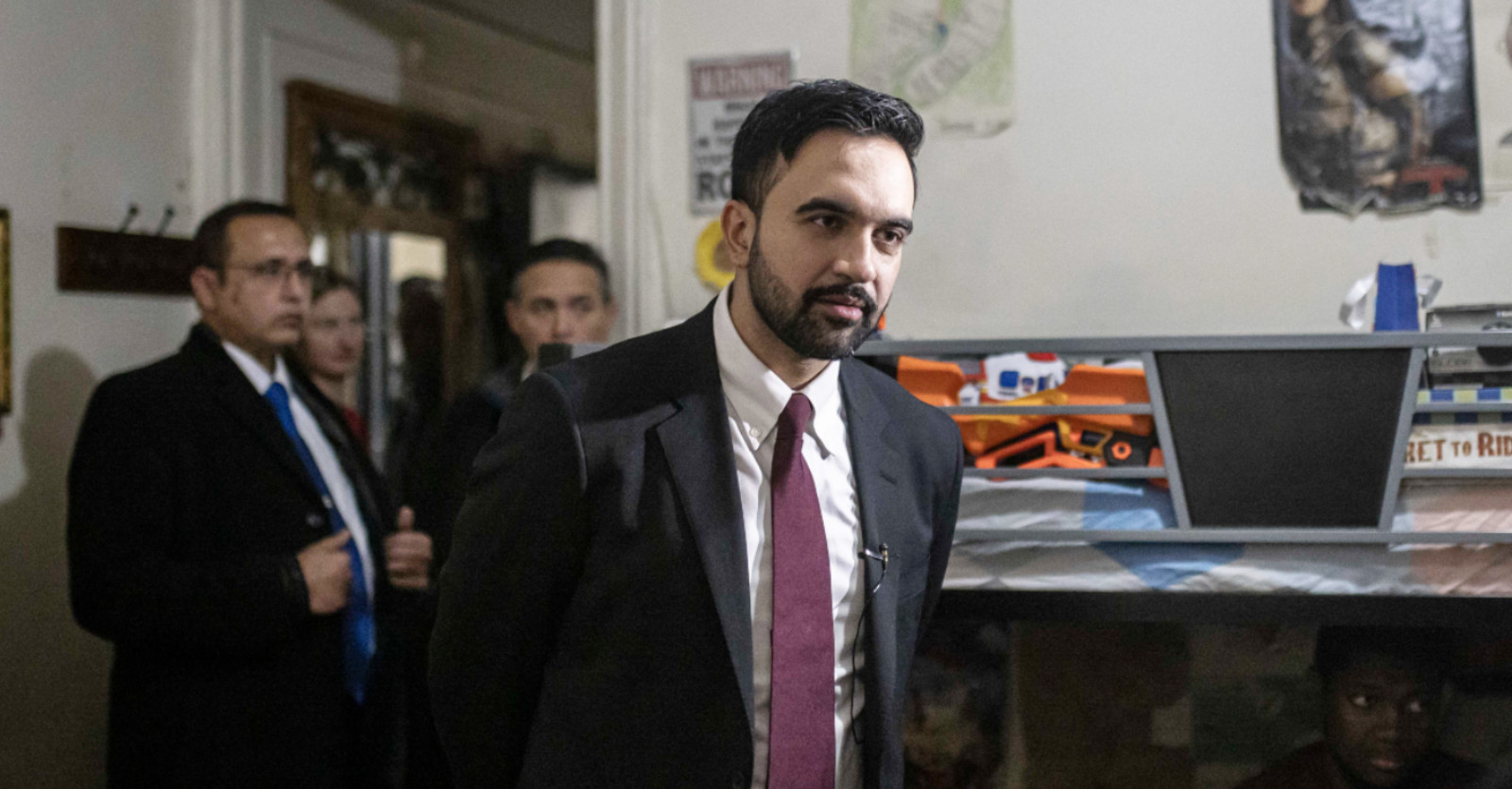
Backlash against New York City Mayor Zohran Mamdani continues to mount, with the Democratic Socialist facing another public rebuke after reportedly being denied the opportunity to speak at the funeral of a U.S. Army soldier killed during an Iranian missile attack.
According to multiple reports, Mamdani attended Friday’s funeral for Army Sgt. Angel Sarah Rampersad in Queens but remained silent throughout the service after the soldier’s family reportedly chose not to have him address mourners.
Rampersad was one of three American service members killed in Jordan during an Iranian attack on July 17.
The funeral was held at a church in Ozone Park, where elected officials, community leaders, family members and fellow mourners gathered to honor the 28-year-old soldier’s sacrifice.
According to the New York Post, Mamdani appeared to review prepared remarks on an iPad while other dignitaries spoke, but his name was never called.
A source familiar with the funeral told The Post the decision came directly from Rampersad’s family, which reportedly wanted to keep politics out of the ceremony.
The family chose not to have Mayor Zohran Mamdani speak in an effort to avoid what the source described as “political distractions.”
After the funeral concluded, the mayor’s office released the remarks Mamdani had planned to deliver.
“It is often said that our fallen ‘gave their tomorrows for our today,’” Mamdani planned to say.
“Sergeant Rampersad had tomorrows waiting for her: birthdays, ordinary mornings, evenings spent with her loved ones,” his remarks continued.
“But she gave every one of them up so that we could have ours — so that we could stand here today, safe and protected,” he was to say.
New York Gov. Kathy Hochul, however, did address those gathered and offered an emotional tribute to the fallen soldier.
“I feel after reading and admiring this woman from a distance, I feel like she could be one of my daughters,” Hochul said.
Other speakers included Ozone Park Residents Block Association President Sam Esposito, state Sen. Joseph Addabbo Jr., and Queens Borough President Donovan Richards.
According to the Department of War, Sgt. Angel Sarah Rampersad, 28, of Ozone Park, New York, was killed in action during an enemy attack at Muwaffaq Salti Air Base in Jordan.
U.S. Central Command said Rampersad and two fellow service members were killed while American and coalition forces defended against Iranian ballistic missile and drone attacks.
The other fallen Americans were identified as 1st Lt. Tyler James Feehan, 25, of Ewa Beach, Hawaii, and Pvt. Isabella Gonzales, 19, of Carrollton, Texas.
All three were deployed to Jordan in support of Operation Inherent Resolve, the international mission to combat ISIS in Iraq and Syria.
Rampersad served with the 1st Battalion, 57th Air Defense Artillery Regiment, 52d Air Defense Artillery Brigade, 10th Army Air and Missile Defense Command in Ansbach, Germany.
She worked as a 25U Signal Operations Support Specialist, according to the Department of War.
One person who attended the funeral told the newspaper the mayor appeared visibly upset after realizing he would not be invited to speak.
“He looked over at his staff, frustrated and seemed angry that he didn’t speak,” the source told the Post.
The attendee said Mamdani eventually understood that his name would not be called, glanced toward members of his staff, and put away the tablet that reportedly contained his prepared remarks.
Another source cited by the newspaper said the decision reflected the wishes of Rampersad’s family, describing them as politically conservative and supportive of President Donald Trump.
“The family is more conservative and wanted to limit any political distractions,” the source told the Post.
Neither Mamdani’s office nor members of the Rampersad family have publicly confirmed the account explaining why the mayor was not invited to speak.
Although he never addressed the congregation during the service, the mayor’s office later publicly released the remarks he had prepared, bringing attention to a moment that underscored the growing political controversy surrounding New York City’s new mayor.

Everyday Americans Being Treated As Criminals — Including You, Right Now

Cracker Barrel Fans Outraged Again After NEW Major Change

Mamdani Kicked Out — He’s Livid After Latest Announcement

GOP Just Passed It 232-288 — Pelosi And AOC Lose It On House Floor

All Hell Breaks Loose In Senate After Wild Vote — It’s Shut Down!

Top Trump Admin And Wife Found Dead — Chilling Update Just Released
Top Trump Admin And Wife Found Dead — Chilling Update Just Released

Mayor Mandami Enraged — NYPD Defies Him Over Insane New Order
Cracker Barrel Fans Outraged Again After NEW Major Change
All Hell Breaks Loose In Senate After Wild Vote — It’s Shut Down!
GOP Just Passed It 232-288 — Pelosi And AOC Lose It On House Floor
Mamdani Kicked Out — He’s Livid After Latest Announcement
-

 Economy4 months ago
Vance Leaves Meeting, Looks Straight Into Camera, Announces Stunning Arrest
-
 Economy4 months ago
Adam Schiff Facing 30 Years In Prison After Bank Records Leak
-
 Economy4 months ago
Supreme Curt Sides With Trump — He Can Remove The All
-
 Economy5 months ago
All Hell Breaks Loose On Fox When Jesse Watters Asks Fetterman One Question
-
 Culture2 months ago
Michelle Obama Drops Nasty Bomb About ‘Useless’ Daughter
-
 Economy3 months ago
Prayers Pour In After Fox Host Dies: ‘Senseless Murder’
-

 Latest2 months ago
Fox News Stuns With Announcement About 5 Fired Hosts
-

 Economy4 months ago
NBC Stops LIVE Broadcast — Breaks Big Trump News