
Border & Security
Trump’s Return to NYC for Historic NBA Finals Game Takes Dramatic Turn


The Trump administration is preparing what could become one of the largest immigration enforcement operations in New York City history, as Border Czar Tom Homan announced that a significant increase in ICE activity is on the horizon for the nation’s largest city.
The announcement comes as President Donald Trump continues delivering on one of the central promises of his successful 2024 campaign: restoring immigration enforcement and reversing years of policies that critics argue weakened border security and undermined the rule of law.
Speaking with Fox News on Monday, Homan revealed that federal officials have finalized plans for a major operation targeting illegal immigration in New York City.
“You’re going to see more ICE than you’ve ever seen in New York City.”
Homan stopped short of providing specific details but made clear that preparations are already underway.
“It’s coming,” Homan told Fox News. “I just reviewed an operational plan. I’m not going to tell you exactly when it’s going to happen, but it’s coming.”
According to Homan, New York officials were warned that increased federal enforcement would likely become necessary after state leaders continued adopting policies that limit cooperation between local authorities and federal immigration agencies.
The announcement follows Governor Kathy Hochul’s approval of legislation that prohibits ICE agents from wearing masks during operations and places additional restrictions on cooperation between local law enforcement agencies and federal immigration authorities. The measure also allows individuals to pursue legal action against federal officials under certain circumstances.
Trump administration officials argue that such policies make it harder for ICE agents to safely perform their duties and ultimately force federal authorities to conduct more operations directly within communities rather than transferring illegal immigrants already being held in local detention facilities.
Administration officials have repeatedly argued that cooperation between local law enforcement and federal agencies would reduce the need for broader enforcement actions while improving public safety.
The news comes as President Trump returned to his hometown of New York City for Game 3 of the NBA Finals at Madison Square Garden. The visit generated significant attention as security preparations intensified around the arena.
Trump, a lifelong New Yorker, was expected to attend the game from a private executive suite while being protected by an extensive security presence involving both the Secret Service and the New York Police Department.
While some critics complained about increased security measures surrounding the president’s visit, supporters viewed the turnout as another reminder of Trump’s enduring connection to the city where he built his business empire long before entering politics.
Meanwhile, opposition to the administration’s immigration agenda has continued to generate protests throughout parts of the Northeast.
Hundreds of demonstrators have maintained a presence outside Delaney Hall, a large ICE detention facility located in Newark, New Jersey. The protests have occasionally escalated into confrontations with law enforcement officers and federal agents.
Video footage circulating online has shown numerous arrests as authorities attempt to maintain order around the facility.
Despite the criticism, Trump administration officials remain committed to their immigration agenda. They argue that stronger enforcement measures are necessary to restore integrity to the immigration system and ensure federal laws are enforced consistently.
The administration also announced new efforts to review cases involving alleged immigration-related fraud, further signaling its intention to increase scrutiny of immigration programs and eligibility requirements.
For Trump supporters, the planned New York operation represents another step toward fulfilling promises made during the campaign. The president repeatedly pledged to prioritize border security, deport criminal illegal immigrants, and strengthen immigration enforcement nationwide.
With federal officials now preparing a significant expansion of ICE operations in New York City, the administration appears poised to demonstrate that those promises remain at the center of Trump’s second-term agenda.
As Homan’s warning makes clear, federal immigration enforcement efforts are about to become far more visible in one of America’s largest sanctuary jurisdictions—and the administration shows no signs of backing away from its commitment to enforcing the nation’s immigration laws.


A U.S. Customs and Border Protection supervisor is facing serious federal charges after investigators alleged he secretly stripped newer components from dozens of government computers, replaced them with inferior hardware and traded some of the original parts for personal credit.
Terry Liu, 39, a CBP supervisor assigned to the Calais Port of Entry in Maine, was arrested in September and charged in federal court in Bangor with theft of government property and destruction of government property.
Each charge carries a potential maximum sentence of 10 years in prison and a fine of up to $250,000.
The case centers on what investigators say happened to 46 government computers spread across three CBP locations.
According to an FBI probable cause affidavit, CBP information technology employees discovered on Dec. 19, 2025, that multiple agency computers had apparently been altered without authorization from management or IT personnel.
An inventory soon revealed the scale of the problem.
Investigators identified 38 affected computers at Calais, another six at Ferry Point and two at Milltown.
BREAKING: Terry Liu, the Chinese national arrested this week in Maine, has been charged with illegally modifying the hardware of Customs and Border Patrol computers at the Maine-Canada border.
Liu, who described himself as a native of Guangzhou, China, was caught on camera… pic.twitter.com/PC1hZJi987
— Steve Robinson (@SteveRob) September 11, 2026
Authorities allege that processors had been replaced in 39 computers, RAM had been changed in six and hard drives had been swapped in eight. Some computers allegedly had multiple components replaced.
And the hardware wasn’t simply being exchanged for equivalent parts.
According to investigators, some of the original computers contained newer 14th-generation Intel processors, including Core i7-14700 chips.
Those components were allegedly replaced with older 12th- and 13th-generation Intel Core processors or Intel Pentium chips that failed to meet CBP specifications.
Many of those altered machines were then reportedly reconnected to the government’s network.
As officials tried to determine what was happening, Liu received an explicit written instruction from Port Director Theodore Cummings on March 18, 2025:
“Please do not move any computers or computer parts.”
Investigators eventually turned to surveillance cameras.
According to the affidavit, cameras captured activity during Liu’s overnight shifts, when relatively few other officers were around.
Footage allegedly showed Liu removing computer side panels and working inside the machines. Investigators described him using a screwdriver in a manner consistent with scraping thermal paste from processors, exchanging components and testing the altered systems.
But the investigation didn’t stop with the surveillance footage.
Authorities say financial and email records provided another piece of the puzzle.
Investigators allege that original government computer components were submitted to Newegg’s trade-in program.
They identified 13 emails containing shipping labels and trade-in summaries involving processor models matching government equipment, with offers reportedly worth $200 or $210 apiece.
Newegg records allegedly revealed 16 transactions involving 14th-generation Intel Core i7 processors between May 2025 and July 2026.
Credit-card records showed at least $600 in related credits, while emails referenced trade-in offers totaling at least $2,660, according to the affidavit.
The alleged financial benefit was only part of the government’s concern.
CBP estimated that restoring the computers with their original components would cost more than $20,000.
Replacing all 46 machines altogether was estimated to cost more than $105,000.
Investigators interviewed Liu on Sept. 9.
According to the affidavit, Liu admitted replacing CBP computer components with older hardware and acknowledged using government equipment through Newegg’s trade-in program for credit.
He initially told investigators that his modifications were intended to improve the computers’ efficiency.
But authorities say that explanation changed under further questioning.
According to the affidavit, Liu acknowledged knowing that the modifications actually degraded the computers’ performance and said frustration over the amount of time required for CBP’s IT department to complete repairs contributed to his actions.
One important element is notably absent from the allegations.
The affidavit does not accuse Liu of installing malware on CBP computers or transmitting government information outside the agency.
CBP’s Office of Professional Standards had already opened an investigation in January concerning Liu’s conduct while working for the agency.
Federal prosecutors are now seeking to keep him detained as the criminal case proceeds.
Assistant U.S. Attorney Chris Ruge cited concerns about Liu’s “recent and frequent international travel” and his alleged “apparent foreign connections and substantial means with which to flee.”
The case remains pending, and the charges are allegations that prosecutors would have to prove in court.
What investigators have alleged, however, is an unusual breach from inside a federal law-enforcement agency: dozens of government computers altered without authorization, newer hardware allegedly removed and replaced with older components, and government property allegedly fed into a commercial trade-in program for credit.
Now a CBP supervisor entrusted with helping oversee operations at a U.S. port of entry is facing the possibility of years in federal prison if convicted.
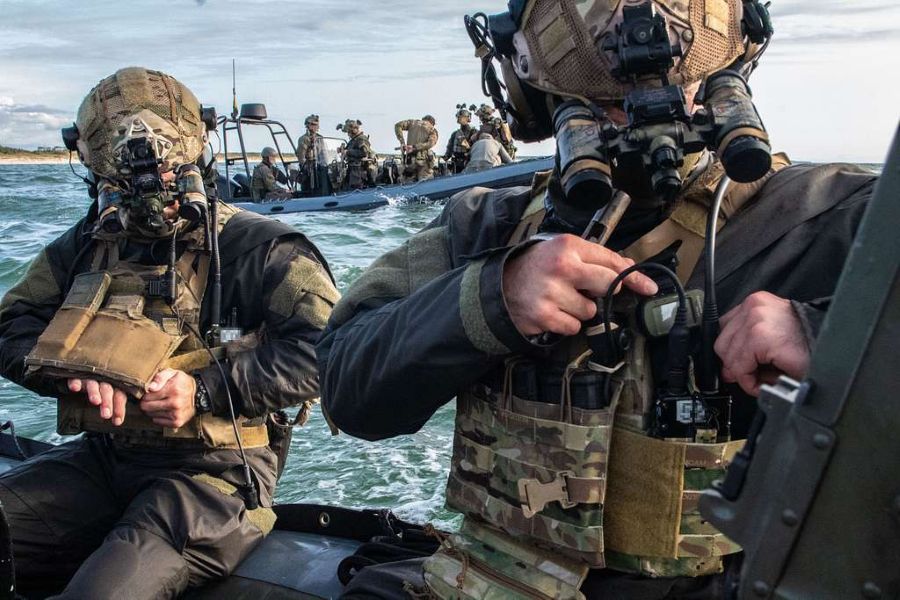
Under the cover of darkness, some of America’s most elite warriors spent four dangerous months hunting Iranian sea mines in one of the most strategically critical waterways on Earth.
The extraordinary operation in the Strait of Hormuz was far larger — and far more dangerous — than previously known.
U.S. forces reportedly deployed Navy SEAL divers, underwater drones, robotic vessels and sophisticated sonar systems in a painstaking effort to find and destroy mines allegedly planted by Iran and keep a critical artery of global commerce from being choked off.
For the Americans sent into the water, the stakes could hardly have been higher.
Once a mine was located, Navy divers could be forced to physically approach the explosive and attach a charge to destroy it.
“That is usually followed up by a navy diver who’s got to get in the water and approach the mine, and then put a charge on it and destroy it,” retired U.S. Navy Capt. Bill Hamblet told the Financial Times.
One mistake could have been catastrophic.
## A High-Stakes Mission Hidden Beneath the Surface
U.S. Central Command announced in April that American forces had begun setting the stage for mine-clearing operations in the Strait, including deploying underwater drones.
But what followed was an extensive months-long operation involving some of the U.S. military’s most advanced technology — and personnel willing to enter the water when machines alone couldn’t finish the job.
The Navy deployed the Common Uncrewed Surface Vessel, a robotic boat capable of towing sophisticated underwater equipment such as the MK 18 Mod 2 Kingfish.
The Kingfish uses sonar to scour the seafloor for potential explosives, giving American forces the ability to hunt for mines without immediately sending sailors into danger.
Once a threat was identified, unmanned systems could destroy some mines.
Others required the human element.
Despite the extraordinary risks involved, no U.S. casualties have been reported in connection with the operation.
## Roughly 80 Mines Threatened One of the World’s Most Important Waterways
The scale of the threat was enormous.
The International Maritime Organization estimated earlier this year that roughly **80 mines** had been deployed in and around the Strait of Hormuz.
That number matters because the Strait isn’t simply another shipping route.
It is one of the most important maritime chokepoints on the planet, carrying a substantial share of the world’s oil.
Disrupting it doesn’t just threaten ships.
It threatens energy markets and international commerce far beyond the Middle East.
President Donald Trump announced in August that mines had been removed from international shipping lanes through the Strait. U.S. Central Command later confirmed American forces had cleared the lanes and were protecting commercial vessels traveling through the region.
But clearing the mines did not necessarily end the threat.
## Iran Accused of Trying to Mine the Strait Again
Iran has continued claiming mines remain active in parts of the Strait, while the United States has accused Tehran of attempting to rebuild its ability to threaten shipping through the strategic waterway.
Commercial shipping operators remain wary, particularly outside areas near the Omani coast where American forces have been escorting vessels.
And one mine warfare expert issued an ominous warning about what could be happening now.
“It’s hard to know what to believe,” Ethan Connell, assistant director of Taiwan Security Monitor and an expert on mines, told the FT. “Iran is certainly trying to re-mine.”
If true, it means American forces could be facing a brutal cycle: find the mines, destroy them — then hunt for newly deployed explosives all over again.
The continuing danger posed by mines, missiles and drones has already taken a toll.
Visible commercial traffic through the region remains well below the levels recorded before the conflict intensified.
Some ships have reportedly resorted to moving through the Strait at night with their tracking equipment switched off while under U.S. military protection.
## The Battle to Keep the Strait Open Isn’t Over
The four-month operation reveals just how far the United States has been willing to go to prevent Iran from using mines to squeeze one of the world’s most vital shipping corridors.
Navy SEAL divers entered dangerous waters.
Robotic vessels hunted beneath the surface.
Underwater drones scanned the seafloor.
And American forces spent months methodically clearing explosives from international shipping lanes.
Yet perhaps the most troubling part of the operation is what comes next.
Sea mines can potentially be deployed far faster than they can safely be found and destroyed.
That means even after four months of dangerous clearance work, U.S. forces remain locked in an ongoing contest to prevent the Strait of Hormuz from once again becoming a minefield — and to keep one of the world’s most important economic lifelines open.
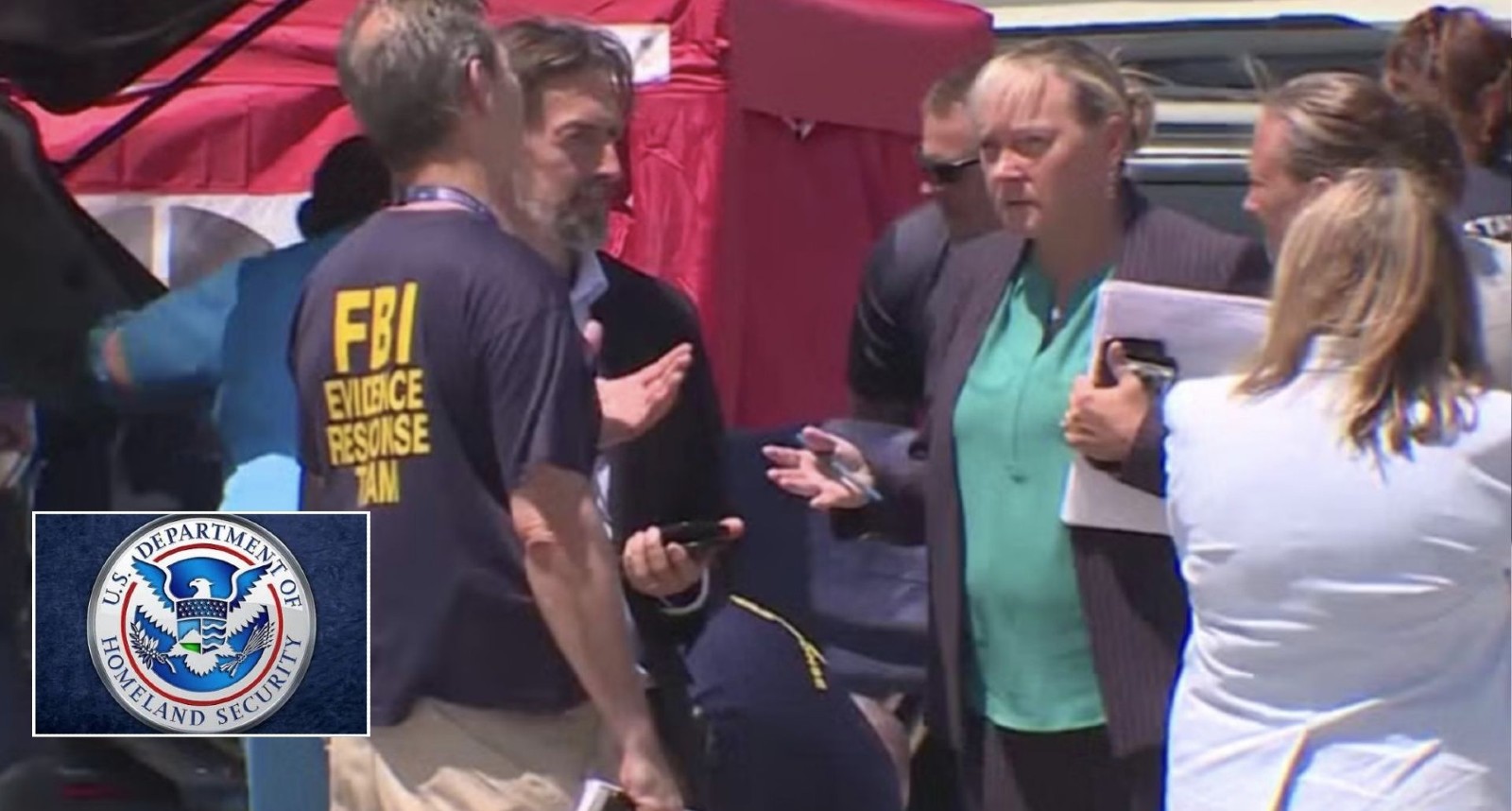
A Department of Homeland Security special agent is accused of fatally shooting his wife before turning the gun on himself in a tragic murder-suicide that has stunned a New Jersey community and prompted an ongoing investigation.
Authorities say Christopher Latauro, 52, and his wife, Kelly Latauro, 46, were found dead at their Sayreville home on July 3 after police responded to a residence on Glynn Court at approximately 8 p.m.
According to the Middlesex County Prosecutor’s Office, officers discovered Kelly Latauro dead inside the home while Christopher Latauro was found dead in the backyard. Both suffered apparent gunshot wounds.
Investigators believe Christopher Latauro shot his wife before taking his own life. Officials continue to investigate the case as a murder-suicide.
As detectives processed the scene, police closed Glynn Court between Deerfield Road and Scarlet Drive before reopening the roadway roughly 40 minutes later. Investigators, however, remained at the residence for several hours gathering evidence.
According to NJ101.5, citing Department of Homeland Security records from 2019 and 2020, Christopher Latauro served as a special agent with the agency.
Authorities have not publicly identified a motive for the killings.
The loss has devastated family members, including Kelly Latauro’s sister-in-law, Robyn Perlman-Spencer, who shared an emotional tribute on Facebook days after the tragedy.
“As many of you may now know, my beautiful sister-in-law Kelly Latauro was senselessly and suddenly taken from us on Friday,” she wrote.
“Kelly was a bright light—kind, thoughtful, hysterical, inappropriate, and just one of the most amazing people I’ve ever known,” the post noted further.
Sayreville police confirmed officers responding to the home found both individuals dead from gunshot wounds, while the Middlesex County Prosecutor’s Office continues to lead the investigation.
The tragedy comes as the Department of Homeland Security is simultaneously taking a far more aggressive role in another high-profile issue: election security.
Homeland Security Secretary Markwayne Mullin recently warned that election officials who refuse to cooperate with the administration’s election integrity initiatives could face significant penalties, including criminal prosecution.
Speaking at the Eisenhower Executive Office Building, Mullin said officials who ignore federal guidance after receiving information needed to secure their election systems could be held personally responsible.
“If the election officials, once we gave them the information they need to secure their elections — and they chose not to — then those individuals can also be held accountable by fines, by penalties, and even, depending on how far it goes, prison time,” Mullin said.
Mullin also announced that DHS will accelerate election security efforts nationwide and suggested certain federal election security grants could be withheld from states that decline to implement administration-backed safeguards. Among those measures is the use of the Systematic Alien Verification for Entitlements (SAVE) system to help identify potential non-citizens on voter registration rolls.
His remarks followed President Donald Trump’s recent address on election security, during which the president highlighted concerns about election infrastructure, foreign cyber threats, and the integrity of voter registration systems.
The Justice Department has likewise begun increasing pressure on states, sending letters to election officials warning that failure to remove ineligible non-citizens from voter rolls could result in legal action.
According to Mullin, 23 states are already partnering with DHS to review voter registration records using federal immigration databases.
The secretary also blasted legal challenges that recently blocked the administration from creating a database containing Americans’ Social Security numbers, citizenship status, and other personal information, arguing those lawsuits have slowed efforts to strengthen election security.
Meanwhile, President Trump continues to push Congress to pass the SAVE America Act, legislation designed to tighten election integrity standards by requiring proof of citizenship and government-issued identification for voting, among other reforms. The measure has remained one of the president’s top legislative priorities over the past year.
With the 2026 midterm elections drawing closer, Republicans believe the legislation now has its best opportunity yet to become law, although Vice President JD Vance may ultimately be called upon to cast a tie-breaking vote if the Senate divides evenly.
Sen. John Hoeven, R-N.D., said Senate Republicans are working through the weekend to restructure the SAVE America Act so it can advance through the budget reconciliation process, allowing the legislation to pass with a simple majority instead of the 60 votes typically required to overcome a filibuster.
Appearing on Newsmax’s “Saturday Agenda,” Hoeven said the House-approved budget resolution provides Republicans with a procedural pathway to bypass the filibuster, provided the bill’s voter identification provisions satisfy Senate reconciliation rules and survive review by the Senate parliamentarian.

Warren Buffett Makes Shocking Announcement

Dolly Parton Delivers Stunning Video Message Weeks After Her Death

Get Ready — Mike Pence Makes Stunning 2028 Announcement

Trump Chief Of Staff Susie Wiles Shares Shocking Personal News

JD Vance Issues Stunning New Warning – Didn’t Expect This!

Removed From the Country — Ilhan Omar Hit With Horrid News

‘The Five’ Gets Emotional As Greg Gutfeld Announces Tragic News

‘EFFECTIVE IMMEDIATELY’ — Barack Obama Gets Devastating News

Everyday Americans Being Treated As Criminals — Including You, Right Now

Schumer Loses! Court Sides With Trump In Historic Move

HUGE: 9/11 Widow Goes Rogue, Makes Damning Call Out During Ground Zero Ceremony

JUST IN: SCOTUS Shocks GOP With Brutal Ruling
-
 Economy5 months ago
Vance Leaves Meeting, Looks Straight Into Camera, Announces Stunning Arrest
-
 Economy5 months ago
Adam Schiff Facing 30 Years In Prison After Bank Records Leak
-
 Economy5 months ago
Supreme Curt Sides With Trump — He Can Remove The All
-

 Culture3 months ago
Michelle Obama Drops Nasty Bomb About ‘Useless’ Daughter
-
 Economy5 months ago
All Hell Breaks Loose On Fox When Jesse Watters Asks Fetterman One Question
-

 Economy3 months ago
Prayers Pour In After Fox Host Dies: ‘Senseless Murder’
-

 Latest3 months ago
Fox News Stuns With Announcement About 5 Fired Hosts
-
 Economy5 months ago
NBC Stops LIVE Broadcast — Breaks Big Trump News