
Economy
New Indictment Against Trump Allies Just Announced…


More than five years after the 2020 election, Arizona Democrats are once again trying to revive one of the most politically charged cases in the country, signaling that the left has no intention of moving on from its long-running effort to target President Donald Trump and those who supported him.
Arizona Attorney General Kris Mayes is preparing to take the state’s so-called “fake electors” case back before a grand jury after suffering a major setback in court. The Arizona Supreme Court recently declined to rescue the original indictment, forcing prosecutors to start over if they want the case to continue.
The legal battle centers on a group of Republican electors and Trump allies who challenged the results of the 2020 election in Arizona. In 2024, a grand jury indicted 18 individuals, including several high-profile Trump associates, alleging they participated in efforts to contest Joe Biden’s narrow victory in the state.
But the case quickly ran into trouble.
Defense attorneys successfully argued that prosecutors failed to properly instruct the original grand jury on important provisions of federal election law before securing the indictments. A judge ultimately agreed, sending the matter back and effectively wiping away the original grand jury proceedings. When Mayes attempted to overturn that ruling, Arizona’s highest court refused to intervene, delivering a significant blow to the prosecution.
Rather than accept the court’s decision and move forward, Mayes has vowed to begin the process all over again by presenting the case to a new grand jury.
The move is already drawing criticism from conservatives who argue the prosecution has become more about politics than justice. They point out that similar election-related cases around the country have either collapsed, been dismissed, or faced significant legal challenges. The federal election case against Trump was abandoned, while prosecutions in other states have encountered serious obstacles.
Critics also note that Arizona voters have been forced to watch years of taxpayer-funded litigation over events that occurred half a decade ago while the state continues to face pressing issues such as border security, inflation, public safety, and economic growth.
Supporters of the prosecution insist accountability remains necessary. However, opponents argue that the continued focus on 2020 reveals an unwillingness among Democratic officials to accept that the political landscape has changed dramatically since then.
The renewed legal effort comes at a time when election integrity remains a major issue in Arizona politics. The state has become ground zero for ongoing debates over election administration, voter confidence, and federal involvement in state election processes.
For Trump supporters, the latest development looks like another chapter in a familiar pattern: legal battles that refuse to die, even after repeated courtroom setbacks. They see the decision to pursue a new indictment as evidence that some Democratic officials remain determined to keep relitigating the controversies of 2020 rather than focusing on the challenges Americans face today.
Whether the new grand jury ultimately returns fresh indictments remains to be seen. What is clear is that Arizona Democrats are not backing down. Despite losing their appeal and being forced to start from scratch, they are once again preparing to drag Trump allies back into court, ensuring that one of the nation’s most divisive political fights continues well into 2026.


Oil prices took a sharp turn Monday, tumbling to their lowest levels in 11 days as traders reacted to signs of possible diplomatic movement between the United States and Iran — while Saudi Arabia finds new ways to keep massive amounts of crude flowing despite mounting turmoil across the Middle East.
Brent crude for November plunged $2.69, or 2.6%, to $101.18 a barrel by 12:54 p.m. GMT after briefly touching its lowest level since September 10.
U.S. crude fell even harder.
West Texas Intermediate’s October contract, which expires Tuesday, dropped $2.69, or 2.7%, to $97.61 a barrel. The November WTI contract stood at $93.49.
The sudden retreat came despite continued fighting across the Middle East and another exchange of threats between Washington and Tehran over the weekend.
But markets received a potentially significant signal Sunday.
President Donald Trump said he would be open to meeting Iranian President Masoud Pezeshkian, who is expected to travel to New York for this week’s United Nations General Assembly.
Iran has also reportedly conveyed conditions to mediators for potentially reopening negotiations, according to a report citing Iranian security chief Mohsen Rezaei.
Those signals raised the possibility of renewed talks between Washington and Tehran, reducing some of the immediate fears that further escalation could threaten global energy supplies.
But on the ground, the situation remains volatile.
Iran-backed Houthi forces in Yemen said they attacked Riyadh and a Saudi Aramco facility in the Red Sea city of Yanbu while continuing efforts to expand their control in Yemen.
China has also pressed Iran to help restrain the Houthis following an appeal from Saudi Arabia, according to sources familiar with the discussions.
Meanwhile, Saudi Arabia is making major adjustments to keep its oil moving.
Attacks disrupted the kingdom’s East-West pipeline and complicated shipments through Yanbu, but Saudi Aramco has responded by increasing exports through the Strait of Hormuz this month and next.
That shift appears to be having a significant impact on global supply concerns.
“Middle East oil flows remain surprisingly strong despite the disruption to Saudi Arabia’s East-West pipeline,” JPMorgan analysts said in a September 18 note.
The numbers behind the shift are dramatic.
“The most notable pivot has come from Saudi Arabia,” the analysts said, as satellite data indicated Saudi oil moving through the Strait of Hormuz averaged 2.9 million barrels per day over the previous six days.
In August, that figure had been just 700,000 barrels per day.
That massive increase has helped ease immediate fears that the escalating conflict could trigger a much more serious supply crunch.
Oil producers are also increasingly turning to ship-to-ship transfers near Oman to keep crude moving through the region.
Those workarounds have helped prevent a more severe disruption in global supplies, but they aren’t coming cheaply.
Shipping costs have surged as tankers navigate increasingly complicated and potentially dangerous routes.
There are supply concerns elsewhere as well.
Libya’s National Oil Corporation said production at the country’s Sharara oilfield had been partially reduced, although officials did not provide a reason for the reduction.
Monday’s selloff leaves Brent hovering just above the closely watched $100-per-barrel threshold after prices surged above $108 last week.
That puts global oil markets at a critical point.
On one side, continued fighting, attacks on energy infrastructure and disrupted shipping routes are keeping geopolitical risk elevated.
On the other, Saudi Arabia’s ability to reroute enormous quantities of crude — combined with the possibility of renewed diplomacy between Washington and Tehran — is easing fears of an immediate supply shock.
Now traders are turning their attention to New York.
This week’s United Nations meetings could provide the next major signal about whether Washington and Tehran are moving toward negotiations or whether tensions will escalate again.
At the same time, Saudi Arabia is racing to keep crude flowing through one of the world’s most strategically important — and increasingly volatile — energy corridors.
With Brent sitting barely above $100, either development could quickly send oil markets moving again.

An extraordinary era in American business is coming to an end.
Warren Buffett is officially stepping away from the chairman’s seat at Berkshire Hathaway, closing another chapter in a remarkable run that stretched for more than half a century and turned the legendary investor into one of the most influential figures in modern business.
Berkshire announced Friday that Buffett, 96, will become chairman emeritus effective immediately. He isn’t cutting ties with the company entirely, however, and will remain on Berkshire’s board of directors.
Taking his place as chairman will be his son, Howard Buffett.
Howard has served as a Berkshire director since 1993 and has spent decades leading the Howard G. Buffett Foundation. His elevation to chairman represents another major piece of a succession plan Berkshire has been preparing for years.
For Warren Buffett, the announcement marks the latest — and one of the most significant — steps away from the company he spent decades building into a corporate powerhouse.
Buffett had served as Berkshire Hathaway’s chairman since 1970.
During that time, he oversaw an extraordinary transformation, taking what had once been a struggling textile business and building it into a massive conglomerate with operations spanning insurance, railroads, energy, manufacturing, retail and services.
His influence over the company’s day-to-day operations had already begun to diminish.
Buffett stepped down as Berkshire’s chief executive late last year, turning control of the company over to longtime lieutenant Greg Abel.
Now the chairman’s title is changing hands as well.
Friday’s announcement means Berkshire is entering a new era in which Abel runs the company’s operations while Howard Buffett oversees the board.
Warren Buffett, however, isn’t disappearing.
As chairman emeritus, he will remain a director and continue providing his judgment and perspective to the company’s leadership — preserving a connection between Berkshire’s future and the man who shaped its identity for generations.
Following the announcement, Abel paid tribute to the enormous impact Buffett has had on the company.
“Warren’s impact on Berkshire and its owners is without parallel in the history of American business,” Abel said in a statement. “The culture Warren built and the values he championed will remain at the heart of Berkshire, and Howard will be their guardian.”
That culture became almost as famous as Buffett himself.
Rather than chasing every new market trend, Buffett built his reputation around patience, long-term investing, disciplined acquisitions and a straightforward approach to evaluating businesses.
Under his leadership, Berkshire accumulated an enormous portfolio of operating companies while also becoming famous for taking major stock positions in some of America’s most recognizable corporations.
Along the way, Buffett became more than a corporate executive.
His annual shareholder letters, public appearances and Berkshire shareholder meetings turned the Omaha investor into one of the world’s most closely followed voices on investing, business and the American economy.
But the transition away from Buffett has been unfolding for some time.
Last year, Buffett announced that Abel would become Berkshire’s top executive. He later signaled that his own public presence would shrink, including fewer appearances at Berkshire’s annual meeting and an end to writing the company’s annual shareholder letter.
Howard Buffett’s move into the chairman’s position wasn’t unexpected either.
The younger Buffett had long been identified as an important part of Berkshire’s eventual succession structure, with his father previously describing the chairman’s role as a safeguard for the company’s distinctive culture and values once he was no longer overseeing daily operations.
That succession plan is now becoming reality.
Greg Abel is running Berkshire as CEO.
Howard Buffett is taking control of the board as chairman.
And Warren Buffett — after more than five decades at the center of one of the most remarkable corporate transformations in American history — is moving into an advisory role as chairman emeritus.
The legendary investor may still have a seat at the table.
But the company he built is officially moving into its post-Buffett leadership era.
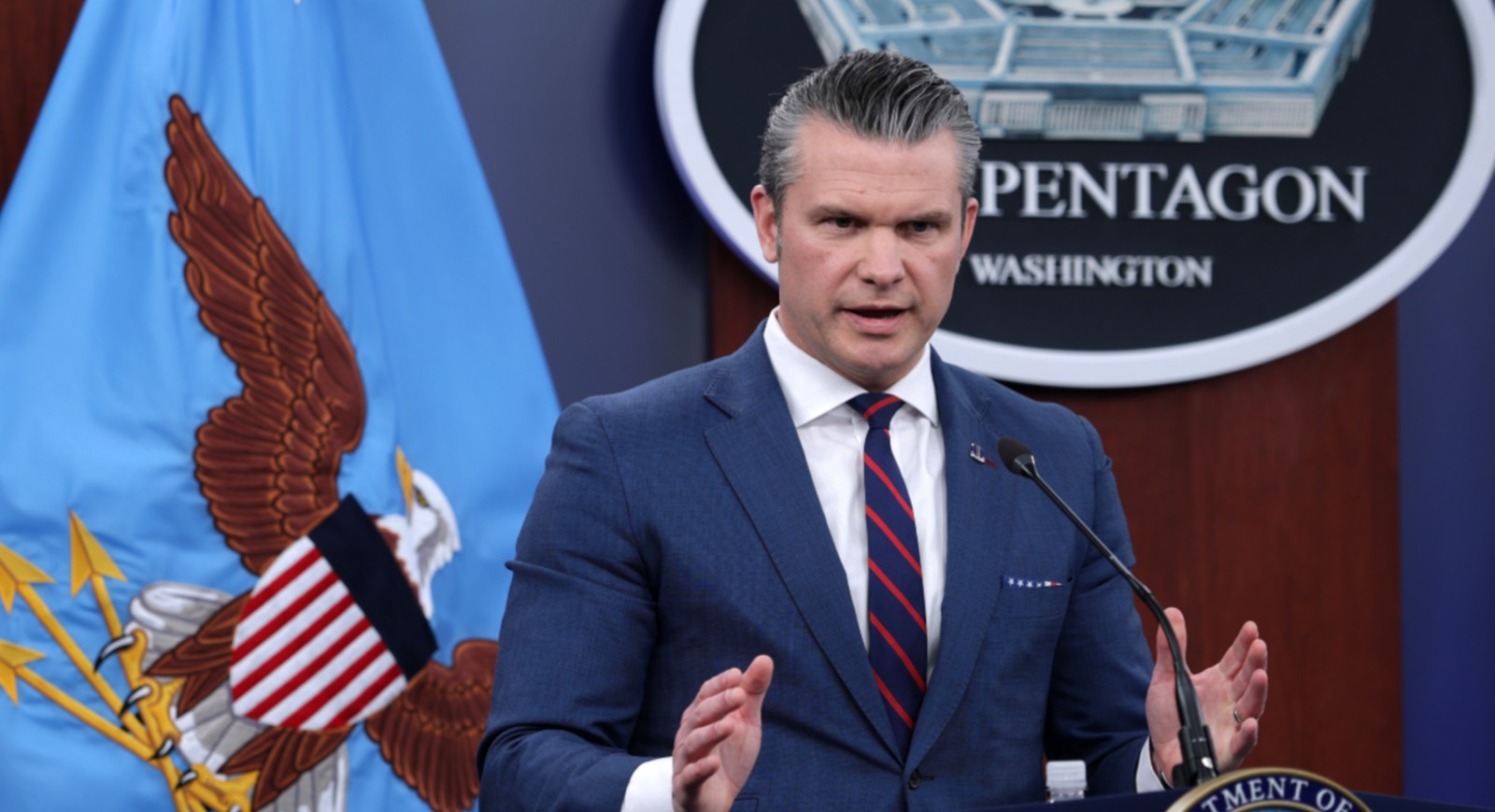
A tragic accident at Edwards Air Force Base claimed the lives of eight Americans Monday when a U.S. Air Force B-52 Stratofortress bomber crashed shortly after takeoff during a routine test mission, according to military officials.
The aircraft went down at approximately 11:20 a.m. PDT while conducting a local test sortie connected to a radar modernization program. Witnesses reported seeing the bomber erupt in flames before a massive plume of black smoke rose into the sky above the Mojave Desert.
Emergency response teams rushed to the scene, but officials quickly determined that there were no survivors.
Speaking at a press conference, Col. James Hayes, deputy commander of the 412th Test Wing, confirmed the devastating loss.
“Today, Edwards Air Force Base experienced a horrible tragedy, and we lost eight great Americans,” Hayes said.
“This crash is deemed to be unsurvivable, and right now, our thoughts and prayers are with the families of those who lost their loved ones,” Hayes added.
Hayes also provided additional details regarding the mission.
“It was a B-52 that was on initial takeoff supporting the radar modernization program, which is a test; it was a local test sortie,” he explained.
According to officials, the crew included military personnel, civilian government employees, and contractors working on the modernization effort. Two Boeing employees were reportedly among those aboard the aircraft.
The loss sent shockwaves through the military community and prompted an outpouring of condolences from government leaders and defense officials across the country.
Defense Secretary Pete Hegseth responded on social media shortly after news of the crash became public.
“May GOD shepherd the souls of these incredible Americans — and watch over their families,” Hegseth wrote.
“Our thoughts and prayers are with the families and unit members at this time. More information will be released as it becomes available,” Hegseth added.
Air Force Secretary Troy Meink also expressed his sorrow over the tragedy.
“We mourn this loss and honor the service of our Airmen, civilians, and contractors who work every day to advance our mission,” Meink said. “My thoughts are with the bomber and test communities during this difficult time.”
The B-52 Stratofortress remains one of the most recognizable aircraft in American military history. First entering service in the 1950s, the bomber has served through multiple conflicts and remains a key component of America’s strategic deterrent capabilities. Despite its age, the aircraft continues to undergo modernization efforts intended to keep it operational for decades to come.
House Speaker Mike Johnson noted the aircraft’s significance to many military communities across the nation.
“The roar of a B-52 is a familiar sound to all of us in Bossier City, Shreveport, and the surrounding region, and reminds us daily of the courage and sacrifice of those in uniform,” Johnson posted.
“As more details emerge, we mourn alongside our military community and pray for the families, friends, and fellow service members grieving this devastating loss,” Johnson added.
The crash also caused damage to portions of the runway at Edwards Air Force Base, forcing officials to temporarily suspend flight operations while investigators and recovery crews secured the area.
Military officials have launched a formal accident investigation. While no cause has yet been identified, aviation experts note that test flights often involve unique operational conditions and that investigators will carefully examine aircraft systems, maintenance records, flight data, weather conditions, and crew communications.
Officials cautioned that a full investigation could take several months before definitive conclusions are reached.
California Gov. Gavin Newsom also extended condolences to the families of those lost while thanking first responders who responded to the scene.
Boeing confirmed that two of its employees were aboard the aircraft and said the company is fully cooperating with investigators.
“It is with great sadness that we confirm two Boeing employees were among those on board. We are in contact with their families and are offering support,” Boeing said.
Sen. Thom Tillis of North Carolina joined other leaders in honoring the victims.
“Susan and I are heartbroken by the tragic loss of eight lives in the B-52 crash at Edwards Air Force Base. Our hearts are with the families and loved ones of those lost, as well as the entire Edwards Air Force Base community. We honor their service to our nation and mourn their loss.”
As investigators work to determine what caused the accident, the nation is mourning the loss of eight Americans who were serving their country in support of a mission aimed at maintaining the technological edge of the U.S. military. Their sacrifice now becomes part of the long and storied history of Edwards Air Force Base, a location that has played a central role in some of America’s most important aviation achievements.

Massive Migrant Caravan Converges On U.S. For Democrat Midterm Victory

JUST IN: Pair Of Senior FBI Officials Arrested — It’s Damning

Pentagon Rolls Controversial Out Doomsday Strategy

NEW: Trump Vows To Prosecute His Own STAFF!

Trump Just Activated ‘Level 3’ — It’s Serious

Powerful Dem Senator Arrested 12 Days Before Midterms

Michelle Obama Public Disaster — Photos Explode Across D.C.

Feds Raid Ilhan Omar’s Home — Make Horrifying Discovery

Arrest Warrant Issued For POTUS Candidate — Horrifying Charges

Ocasio-Cortez QUITS — Stunning Moment On House Floor

Ilhan Omar’s Sister FLIPS — Blows Entire Case Wide Open!

‘I Will Go!’ — Ilhan Omar Drops Shock Announcement
-
 Economy7 months ago
Vance Leaves Meeting, Looks Straight Into Camera, Announces Stunning Arrest
-
 Economy7 months ago
Adam Schiff Facing 30 Years In Prison After Bank Records Leak
-

 Culture5 months ago
Michelle Obama Drops Nasty Bomb About ‘Useless’ Daughter
-

 Economy7 months ago
Supreme Curt Sides With Trump — He Can Remove The All
-
 Economy7 months ago
All Hell Breaks Loose On Fox When Jesse Watters Asks Fetterman One Question
-
 Economy5 months ago
Prayers Pour In After Fox Host Dies: ‘Senseless Murder’
-

 Border & Security3 months ago
Top Trump Admin And Wife Found Dead — Chilling Update Just Released
-

 Latest5 months ago
Fox News Stuns With Announcement About 5 Fired Hosts