
Economy
NEW: John Thune Sparks MAGA Backlash After Alleged Swipe At Trump

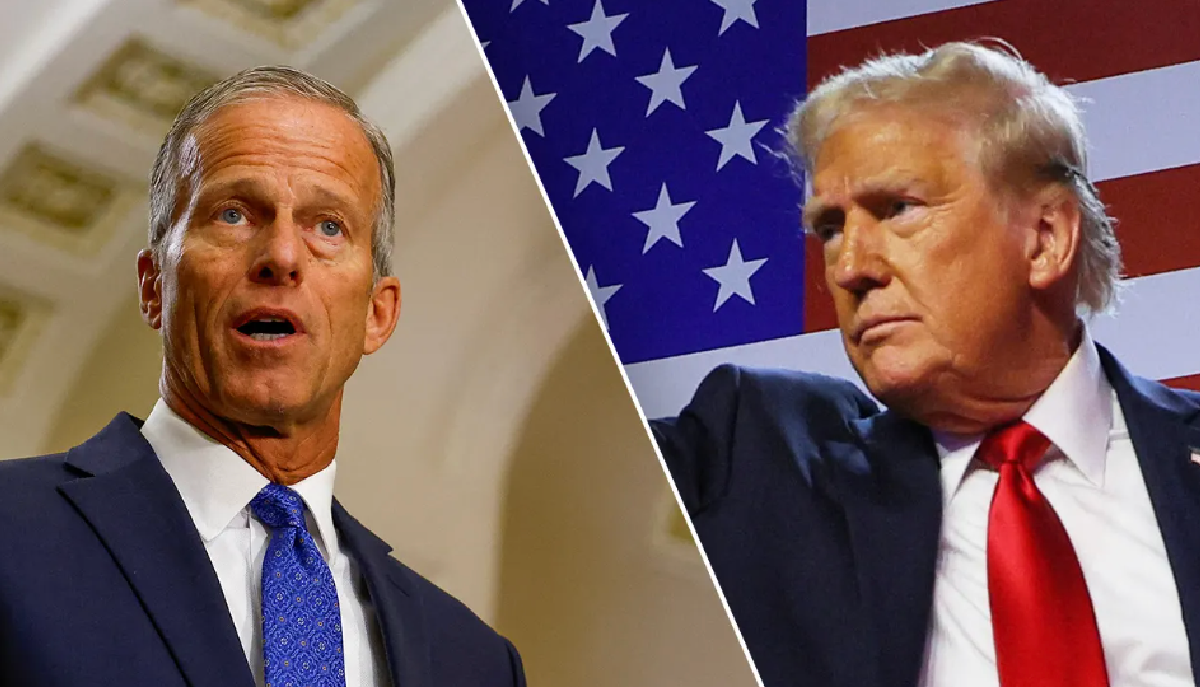
Senate Majority Leader John Thune is finding himself in an increasingly difficult position as President Donald Trump’s controversial “Anti-Weaponization Fund” faces mounting legal challenges and growing skepticism from members of his own party.
The South Dakota Republican declined to declare victory Monday after the Department of Justice announced it would comply with a federal court order temporarily blocking payouts from the fund until at least June 12. The decision followed a surprise ruling by U.S. District Judge Leonie Brinkema, who reopened litigation connected to Trump’s lawsuit against the IRS over the leak of his tax returns.
While the Justice Department’s announcement appeared to signal a retreat, Thune suggested many Senate Republicans remain unconvinced that the controversy has been resolved.
“The way the statement is worded, I think it’s clear that they’re not proceeding with the fund, but obviously whether that’s sufficient to satisfy a number of our members is something we’re still sorting through,” Thune said.
However, it was a separate exchange that quickly grabbed attention.
When reporters asked whether he was concerned Trump might veto a broader funding package if Congress moved to prohibit the fund entirely, Thune responded with a short but pointed reply.
“Oh yeah, don’t you?”
The comment immediately sparked criticism from some conservatives who interpreted the response as dismissive or mocking toward the president at a particularly sensitive moment for Republicans.
The dispute comes as GOP leaders attempt to keep their conference united while negotiating a massive $70 billion immigration enforcement funding package. Democrats could attempt to force amendment votes targeting the Anti-Weaponization Fund, potentially putting Republicans in the uncomfortable position of choosing between supporting Trump’s priorities and avoiding a politically damaging battle ahead of the midterm elections.
Even some of Trump’s strongest Senate allies have signaled dissatisfaction with the administration’s handling of the issue.
Senate Judiciary Committee Chairman Chuck Grassley argued that the White House needs to provide a much clearer answer.
“It’s pretty clear that the President has to say very explicitly that there’s not going to be a weaponization fund,” Grassley said.
Louisiana Sen. John Kennedy was equally blunt while describing the broader funding negotiations.
“The reconciliation bill looks like a broken arm with the bones sticking out,” Kennedy said.
Kennedy also dismissed suggestions that the Justice Department’s promise to follow the court order should end the controversy.
“Saying you’re going to follow a court order doesn’t tell me anything. You have to follow the court order.”
Last week, Judge Brinkema ordered the administration to halt any efforts to establish or operate the fund pending a June 12 hearing. In response, the Justice Department said it “disagrees strongly” with the ruling but would nevertheless comply.
The department defended the fund, arguing it was created to compensate Americans who were unfairly targeted by government actions.
According to the DOJ, the program was intended to address “the tremendous abuse, harm, and hate unfairly shown to so many people” and would be open to anyone who believed they had been subjected to government weaponization or political persecution, regardless of political affiliation.
Despite that defense, reports indicate the administration may now abandon the initiative altogether. One source familiar with the situation told Axios that the fund is “dead for now.”
Still, ending the fund may not fully eliminate the controversy. Critics argue the settlement included another significant provision reportedly granting Trump, his sons, and Trump-affiliated businesses protection from future IRS audits. Whether those protections would remain in place if the fund is terminated remains unclear.
The White House referred questions about the matter to the Justice Department.
The $1.776 billion fund originated from a settlement connected to Trump’s lawsuit against the IRS after a former government contractor leaked his confidential tax returns. The administration has maintained that the money was intended to compensate victims of government “weaponization” and “lawfare,” phrases Trump has frequently used to describe what he believes was politically motivated targeting of conservatives.
Opponents, however, argue the fund lacks congressional authorization, sufficient oversight, and a clear legal foundation. Several lawsuits have challenged the arrangement, including legal actions brought by government watchdog organizations and law enforcement officers involved in the January 6 Capitol riot response.
For now, Thune remains caught in the middle of a growing political storm. Democrats see an opportunity to deepen divisions within the Republican conference, while many conservatives continue demanding a more definitive answer from the Trump administration. As legal challenges continue and tensions rise on Capitol Hill, the Senate majority leader is left trying to prevent a controversial funding dispute from becoming an even larger headache for Republicans.


A tragic accident at Edwards Air Force Base claimed the lives of eight Americans Monday when a U.S. Air Force B-52 Stratofortress bomber crashed shortly after takeoff during a routine test mission, according to military officials.
The aircraft went down at approximately 11:20 a.m. PDT while conducting a local test sortie connected to a radar modernization program. Witnesses reported seeing the bomber erupt in flames before a massive plume of black smoke rose into the sky above the Mojave Desert.
Emergency response teams rushed to the scene, but officials quickly determined that there were no survivors.
Speaking at a press conference, Col. James Hayes, deputy commander of the 412th Test Wing, confirmed the devastating loss.
“Today, Edwards Air Force Base experienced a horrible tragedy, and we lost eight great Americans,” Hayes said.
“This crash is deemed to be unsurvivable, and right now, our thoughts and prayers are with the families of those who lost their loved ones,” Hayes added.
Hayes also provided additional details regarding the mission.
“It was a B-52 that was on initial takeoff supporting the radar modernization program, which is a test; it was a local test sortie,” he explained.
According to officials, the crew included military personnel, civilian government employees, and contractors working on the modernization effort. Two Boeing employees were reportedly among those aboard the aircraft.
The loss sent shockwaves through the military community and prompted an outpouring of condolences from government leaders and defense officials across the country.
Defense Secretary Pete Hegseth responded on social media shortly after news of the crash became public.
“May GOD shepherd the souls of these incredible Americans — and watch over their families,” Hegseth wrote.
“Our thoughts and prayers are with the families and unit members at this time. More information will be released as it becomes available,” Hegseth added.
Air Force Secretary Troy Meink also expressed his sorrow over the tragedy.
“We mourn this loss and honor the service of our Airmen, civilians, and contractors who work every day to advance our mission,” Meink said. “My thoughts are with the bomber and test communities during this difficult time.”
The B-52 Stratofortress remains one of the most recognizable aircraft in American military history. First entering service in the 1950s, the bomber has served through multiple conflicts and remains a key component of America’s strategic deterrent capabilities. Despite its age, the aircraft continues to undergo modernization efforts intended to keep it operational for decades to come.
House Speaker Mike Johnson noted the aircraft’s significance to many military communities across the nation.
“The roar of a B-52 is a familiar sound to all of us in Bossier City, Shreveport, and the surrounding region, and reminds us daily of the courage and sacrifice of those in uniform,” Johnson posted.
“As more details emerge, we mourn alongside our military community and pray for the families, friends, and fellow service members grieving this devastating loss,” Johnson added.
The crash also caused damage to portions of the runway at Edwards Air Force Base, forcing officials to temporarily suspend flight operations while investigators and recovery crews secured the area.
Military officials have launched a formal accident investigation. While no cause has yet been identified, aviation experts note that test flights often involve unique operational conditions and that investigators will carefully examine aircraft systems, maintenance records, flight data, weather conditions, and crew communications.
Officials cautioned that a full investigation could take several months before definitive conclusions are reached.
California Gov. Gavin Newsom also extended condolences to the families of those lost while thanking first responders who responded to the scene.
Boeing confirmed that two of its employees were aboard the aircraft and said the company is fully cooperating with investigators.
“It is with great sadness that we confirm two Boeing employees were among those on board. We are in contact with their families and are offering support,” Boeing said.
Sen. Thom Tillis of North Carolina joined other leaders in honoring the victims.
“Susan and I are heartbroken by the tragic loss of eight lives in the B-52 crash at Edwards Air Force Base. Our hearts are with the families and loved ones of those lost, as well as the entire Edwards Air Force Base community. We honor their service to our nation and mourn their loss.”
As investigators work to determine what caused the accident, the nation is mourning the loss of eight Americans who were serving their country in support of a mission aimed at maintaining the technological edge of the U.S. military. Their sacrifice now becomes part of the long and storied history of Edwards Air Force Base, a location that has played a central role in some of America’s most important aviation achievements.

Maine Democratic Senate nominee Graham Platner is facing renewed scrutiny after a series of resurfaced social media posts revealed a pattern of inflammatory comments that critics say raise serious questions about his judgment, temperament, and fitness for public office.
The latest controversy involves a Reddit comment allegedly posted by Platner under the username “P-Hustle” in response to a story about a teenage girl who had attempted suicide following the death of a family member.
The original post featured a photograph showing a teenage girl hanging from an upper-story window while fellow students worked to pull her back to safety.
“A girl at my old high school tried jumping from a window because her cousin died the day before,” the caption read. “These students saved her. I have hope.”
According to screenshots that have circulated online, the account linked to Platner responded with a remark that many have described as shocking and insensitive.
“Someone clearly isn’t trying hard enough,” the account wrote.
The comment has generated widespread criticism and has become the latest addition to a growing list of controversial online statements tied to the Democratic candidate.
Platner, 41, has already faced mounting questions over other posts that surfaced during the campaign, including comments regarding Hamas, American military veterans, and sexually explicit remarks he allegedly made online over a number of years.
The latest revelations come as Republicans seek to portray Platner as an extreme and deeply flawed candidate heading into one of the most closely watched Senate races of the 2026 election cycle.
Another resurfaced post from 2021 involved a discussion about adult entertainers and military veterans. After another user suggested pornography performers should receive the same level of recognition often afforded to veterans, Platner reportedly replied with a crude joke.
“Thank you for your cervix,” he posted.
Additional reports indicate that Platner’s Kik messaging profile featured a partially nude photograph of himself, further fueling criticism surrounding his online conduct.
Maine House Minority Leader Billy Bob Faulkingham did not hold back in his assessment of the growing controversy.
“Graham Platner is clearly a person with deep and disturbing psychological issues that predate his military service and continue to this day,” Faulkingham told The Post.
The candidate has also come under scrutiny for a 2017 post involving a graphic comment about masturbation and portable toilets.
“I still have to jerk off every time I sit in a portashi–er….that blue water smell conditioned me,” the Democrat posted.
Perhaps even more controversial are comments Platner allegedly made regarding military combat footage and acts of terrorism.
One resurfaced post dates back to 2014 and involved footage shared on the Reddit forum r/combatfootage showing Hamas terrorists attacking Israeli soldiers and attempting to abduct one of them during a deadly encounter.
Using the P-Hustle account, Platner reportedly commented:
“Looks like an all around well executed and successful small unit raid to me.”
The remark has drawn criticism from supporters of Israel and national security advocates who argue that it appeared to praise a terrorist operation against Israeli troops.
Another resurfaced comment targeted Purple Heart recipient Pfc. Ted Daniels, whose combat footage became widely known after he survived being shot multiple times during a Taliban attack in Afghanistan.
Daniels was severely wounded but ultimately survived the engagement, earning recognition for his service and sacrifice.
In a 2019 discussion about the footage, Platner allegedly wrote:
“Dumb motherf–ker didn’t deserve to live. At least his stupidity and fat a– wheezing are available for all future infantrymen to witness and hold in contempt.”
The comments have generated outrage among veterans and military supporters, many of whom view the remarks as deeply disrespectful toward a wounded American servicemember.
The controversy comes at a particularly sensitive time for Platner’s campaign as he prepares to challenge Republican Sen. Susan Collins in November. Democrats view the Maine race as one of their best opportunities to gain ground in the Senate, but the continued emergence of controversial online posts threatens to overshadow the campaign and provide Republicans with additional ammunition.
So far, the resurfaced comments have fueled broader questions about whether Platner’s online history reflects isolated incidents from years ago or reveals a consistent pattern of behavior that voters should consider before casting their ballots.
As the Senate race intensifies, it is likely that additional scrutiny will be directed toward Platner’s digital footprint, with both parties recognizing that the outcome in Maine could play a significant role in determining control of the U.S. Senate.
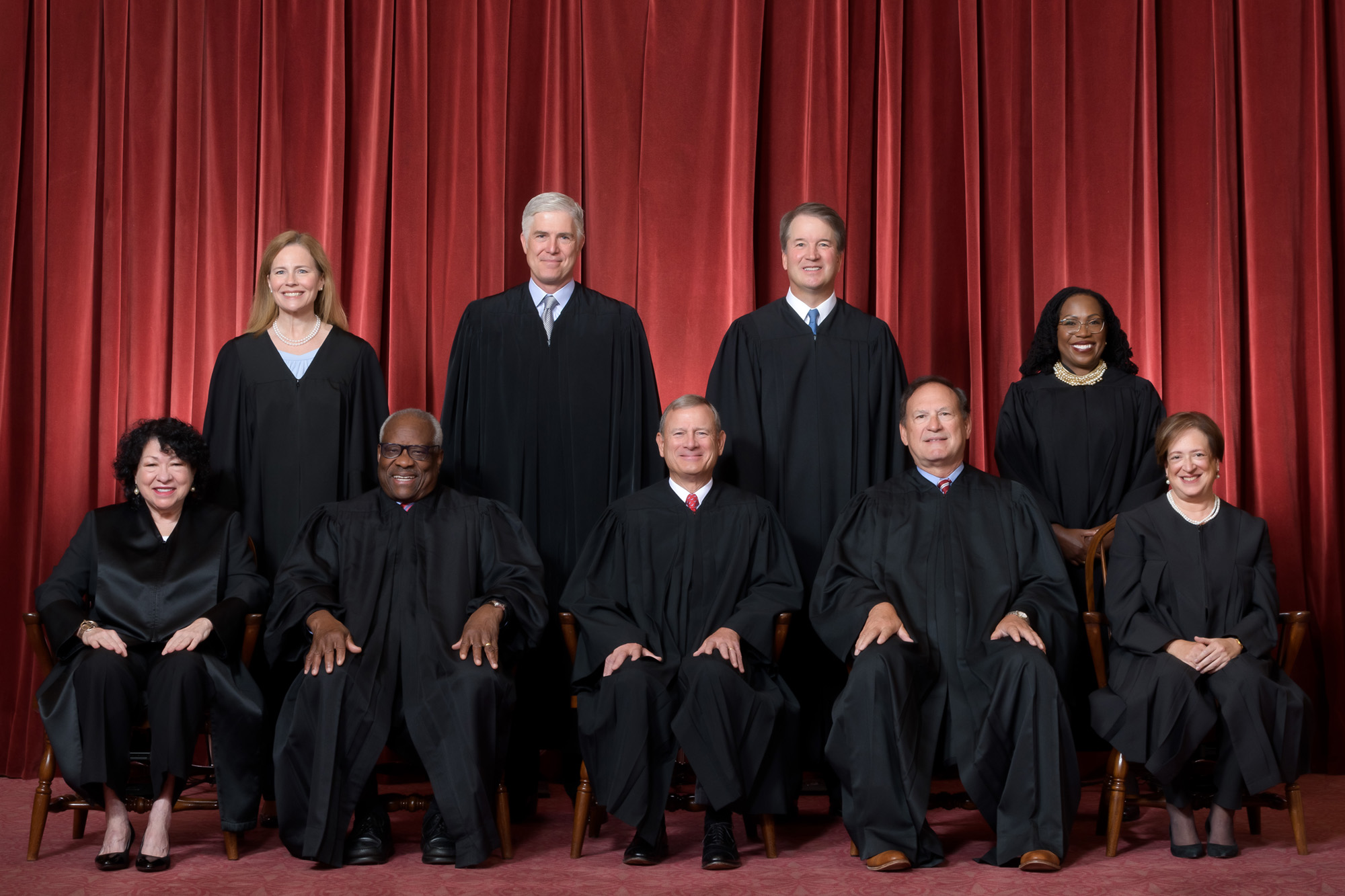
The U.S. Supreme Court delivered a major victory for investment firms and a significant setback for activist hedge funds this week, ruling that shareholders cannot use a key provision of federal law to launch private lawsuits seeking to unwind investment contracts.
In a 6-3 decision, the Court ruled that Section 47(b) of the Investment Company Act of 1940 does not create an implied private right of action allowing shareholders to sue for rescission of contracts they claim violate the law.
The ruling in *FS Credit Opportunities Corp. v. Saba Capital Master Fund, Ltd.* overturns a previous decision from the Second Circuit Court of Appeals that had opened the door for activist investors to challenge corporate actions through private litigation.
The case centered on efforts by Saba Capital, a well-known activist hedge fund, to challenge actions taken by several closed-end investment funds. The dispute arose after certain funds adopted protections designed to prevent activist investors from gaining outsized control over fund operations and forcing changes that management argued were not in the best interests of long-term shareholders.
Writing for the majority, Justice Amy Coney Barrett delivered a forceful defense of the principle that Congress—not courts—determines who has the authority to enforce federal statutes.
“Congress, not the Judiciary, decides who may enforce the law,” Barrett wrote.
“The Investment Company Act designates the Securities and Exchange Commission as its primary enforcer and expressly permits shareholders and issuers of securities to enforce two of its provisions,” she continued.
“We must decide whether another provision of the Act impliedly empowers private parties to sue for rescission of any contract that allegedly violates the Act. The answer is no,” Barrett added.
Joining Barrett in the majority were Chief Justice John Roberts and Justices Clarence Thomas, Samuel Alito, Neil Gorsuch, and Brett Kavanaugh.
The dispute originated when Saba Capital challenged decisions by several investment funds, including entities affiliated with FS Credit Opportunities and BlackRock. The funds had adopted provisions under Maryland’s Control Share Acquisition Act, which restricts voting power for large shareholders who acquire significant ownership stakes.
Supporters of such measures argue they help protect funds from hostile takeovers and activist campaigns designed to generate short-term profits at the expense of long-term investors.
Saba argued that the voting restrictions violated Section 18(i) of the Investment Company Act and sought rescission under Section 47(b). Lower courts had sided with the hedge fund based on prior precedent in the Second Circuit.
The Supreme Court, however, rejected that interpretation.
Barrett emphasized that Section 47(b) discusses remedies available once parties are already properly before a court, rather than creating a new legal right for private individuals to initiate lawsuits.
“Section 47(b)’s wording thus presupposes that parties are already before the court and directs the court’s use of its remedial authority. It says not a word about individual rights,” Barrett explained.
The decision reflects the Roberts Court’s broader commitment to textualism—a judicial philosophy that focuses on the actual language enacted by Congress rather than allowing courts to create new legal rights not expressly provided by lawmakers.
The ruling also reinforces the Securities and Exchange Commission’s role as the primary enforcement authority under the Investment Company Act.
“Private litigants sometimes sue to enforce statutes that lack comparable language,” Barrett noted while rejecting the notion that courts should infer additional causes of action where Congress did not explicitly provide them.
The implications of the decision extend far beyond this particular dispute. Legal experts say the ruling will affect a wide range of investment vehicles, including closed-end funds, mutual funds, business development companies, and other investment structures that collectively manage trillions of dollars in assets.
Supporters argue the decision will provide greater stability for investors by preventing activist hedge funds from using federal courts to pressure companies into restructurings, liquidations, board shakeups, or other actions designed to boost short-term returns.
Industry groups quickly welcomed the outcome. The Investment Company Institute praised the decision, arguing that it preserves the Investment Company Act’s carefully designed regulatory framework and prevents an explosion of private lawsuits that could create uncertainty throughout the industry.
Attorneys representing the funds described the ruling as a major victory for the registered investment fund industry and one that removes a powerful legal weapon previously available to activist investors.
For millions of Americans who invest through retirement accounts, pension funds, and diversified investment portfolios, supporters say the decision promotes predictability and long-term stability by allowing professional regulators—not private litigants—to serve as the primary enforcers of federal investment laws.
The ruling also continues a broader trend at the Supreme Court of limiting judicially created causes of action and reinforcing the principle that Congress must clearly authorize private lawsuits if it intends for them to exist.
For businesses, investment managers, and market participants, the decision provides additional clarity regarding who can enforce federal securities laws and further underscores the Court’s view that policy decisions belong to lawmakers, not judges.

Trump Chief Of Staff Susie Wiles Shares Shocking Personal News

JD Vance Issues Stunning New Warning – Didn’t Expect This!

Removed From the Country — Ilhan Omar Hit With Horrid News

NEW: Popular Republican Senator Has Died

Newsom Probe Just Took ENORMOUS Turn – He’s Going To Need A LOT More Lawyers

Trump Official Confirms Ilhan Omar Is Under Investigation

‘The Five’ Gets Emotional As Greg Gutfeld Announces Tragic News

‘EFFECTIVE IMMEDIATELY’ — Barack Obama Gets Devastating News

Everyday Americans Being Treated As Criminals — Including You, Right Now

HUGE: 9/11 Widow Goes Rogue, Makes Damning Call Out During Ground Zero Ceremony

Schumer Loses! Court Sides With Trump In Historic Move

JUST IN: SCOTUS Shocks GOP With Brutal Ruling
-
 Economy5 months ago
Vance Leaves Meeting, Looks Straight Into Camera, Announces Stunning Arrest
-
 Economy5 months ago
Adam Schiff Facing 30 Years In Prison After Bank Records Leak
-
 Economy5 months ago
Supreme Curt Sides With Trump — He Can Remove The All
-

 Culture3 months ago
Michelle Obama Drops Nasty Bomb About ‘Useless’ Daughter
-
 Economy5 months ago
All Hell Breaks Loose On Fox When Jesse Watters Asks Fetterman One Question
-
 Economy3 months ago
Prayers Pour In After Fox Host Dies: ‘Senseless Murder’
-

 Latest3 months ago
Fox News Stuns With Announcement About 5 Fired Hosts
-
 Economy5 months ago
NBC Stops LIVE Broadcast — Breaks Big Trump News